Technical Guides 4 min read
When Do You Need a Rotating-Trolley Crane?
Orienting long parts in tight spaces: three typical problems a 360° rotating trolley solves.
Ervan Cranes Engineering
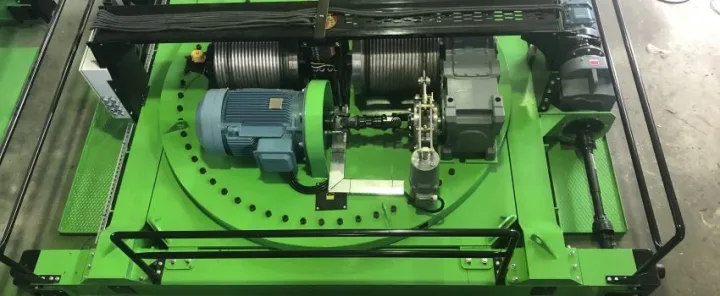
A standard overhead crane moves a load along three axes but does not rotate it. If a long profile, mould or machine body must change orientation inside the building, either the operator turns it by hand or the crane does. Our overview of types of industrial cranes shows where the rotating-trolley crane fits among the other designs.
Problem 1: long parts in narrow aisles
To pass a 12 m profile down an 8 m aisle, the part must be turned into the aisle axis. A rotating trolley does this with the load in the air, at a controlled speed.
Problem 2: precise placement on a machine
A mould being fixtured on a machining centre must be angled to millimetre precision. Turning by hand is slow and risky; the rotating trolley holds the angle. Why stepless speed control and an operator position with a clear view of the load matter for precise placement is covered in our guide to overhead crane controls.
Problem 3: loading bay and line axis differ
If a load taken crosswise from a truck must enter the line lengthwise, a 90° turn happens every cycle. The rotating trolley turns that into a standard motion.
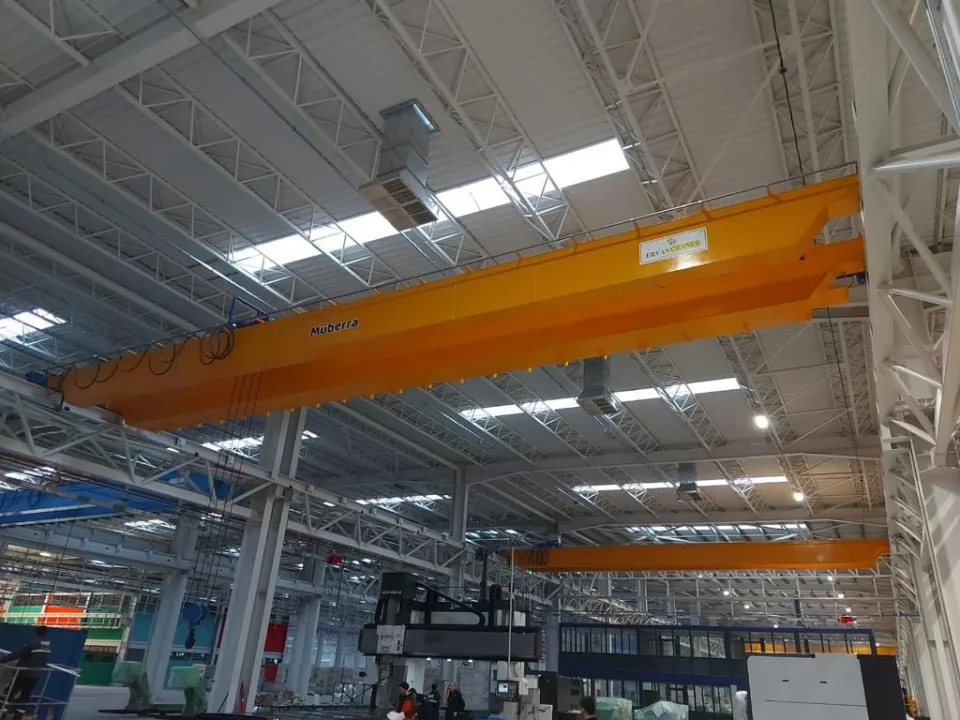
The 10 t rotating-trolley overhead crane we delivered to Albania addresses two of these three needs in the same plant.