Technical Guides 7 min read
Overhead Crane Controls: Pendant, Radio Remote or Operator Cab?
Pendant, radio remote or operator cab? How to match overhead crane controls to the operator's position, the load, the duty and the floor conditions, with a decision table.
Ervan Cranes Engineering
The right overhead crane controls depend on where the operator must stand to see the load and stay clear of it. A pendant suits short travel and simple lifts; a radio remote lets the operator pick a safe position with a clear view; an operator cab suits long spans, intensive duty and hot or hazardous floor areas.
Pendant control: simple and robust
A pendant control station hangs from the crane on a control cable. On most cranes it is suspended from the hoist and moves with the trolley. Alternatively, it runs on its own track along the bridge girder, so the operator can keep a distance from the load wherever the trolley is.
A typical pendant has hold-to-run direction buttons, often two-step for slow and fast speed, an emergency stop, an ON button or key switch for the mains contactor, and a horn. A strain relief in the cable ensures that the conductors never carry the pendant's weight.
- Advantages: simple, robust and intuitive; no batteries and no radio channels; low cost and easy to repair.
- Limitations: the operator walks next to the load, so travel speeds are limited to what a person can safely follow; floor obstacles become trip hazards; the far side of the load is hard to see; the cable can snag or be damaged.
For workshops, maintenance bays and short travel paths where the operator also slings the load, the pendant remains the natural choice.
Radio remote control: freedom of position
With a radio remote control, the operator carries a transmitter, and a receiver on the crane passes the commands to the control panel. Two transmitter types are common: a handheld pushbutton unit, similar to a pendant, and a belly box with joysticks for stepless control and additional functions.
The real gain is position. The operator can stand where the load, the slings and the travel path are all in view, stay outside the danger zone and avoid walking through narrow aisles. On long runways, it also saves time.
Industrial crane radios offer safety functions that belong on your checklist:
- emergency stop on the transmitter
- automatic stop when the signal is lost or disturbed
- unique pairing of transmitter and receiver, so each transmitter controls only its own crane
- start interlock: movement only after a start command and with all controls in neutral
- key switch or code against unauthorized use
- low-battery warning before the transmitter switches off
Plan the practical side too: a spare battery and charger in a fixed place, clear labelling of each transmitter and its crane, and coordinated channels when several radios work in one hall. The remaining risks are behavioural: operating without a clear view, mixing up transmitters, or pressing a button by accident when the unit is put down. Training and a belt or holder address them.
Operator cab: when the crane works all shift
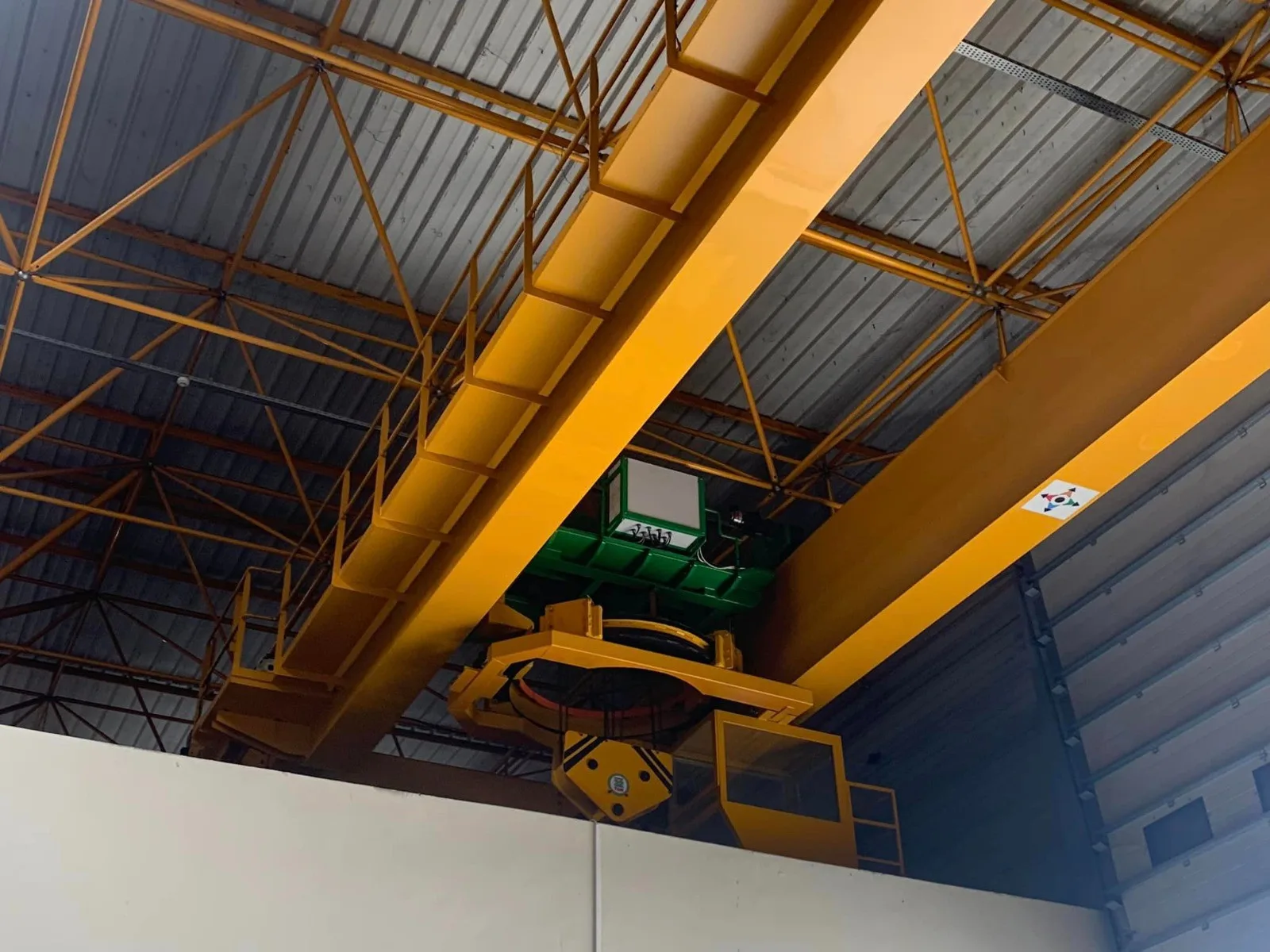
A crane cab makes sense when the crane is the centre of the process: long spans and travel distances, multi-shift operation, heavy loads that need precise handling, or floor areas operators should not enter, such as foundries, forges and hot or dusty zones.
A fixed cab is mounted on the bridge, usually near one end, and travels with it. A cab that travels with the trolley keeps the operator close above the load, which helps on long spans and in precise work. Either way, the cab design determines productivity:
- field of view, with a floor window where the operator looks down
- an ergonomic seat with joysticks (master switches) in the armrests
- heating, ventilation or air conditioning, and protection against heat or dust
- safe access from a boarding platform and a means of escape
A cab also has planning consequences: clearance below the cab along the whole travel path, additional weight, a boarding point at the runway, and a slinger on the floor who communicates with the operator by agreed hand signals or radio. Access to cranes is covered by EN 13586.
Speed control: two-step or stepless?
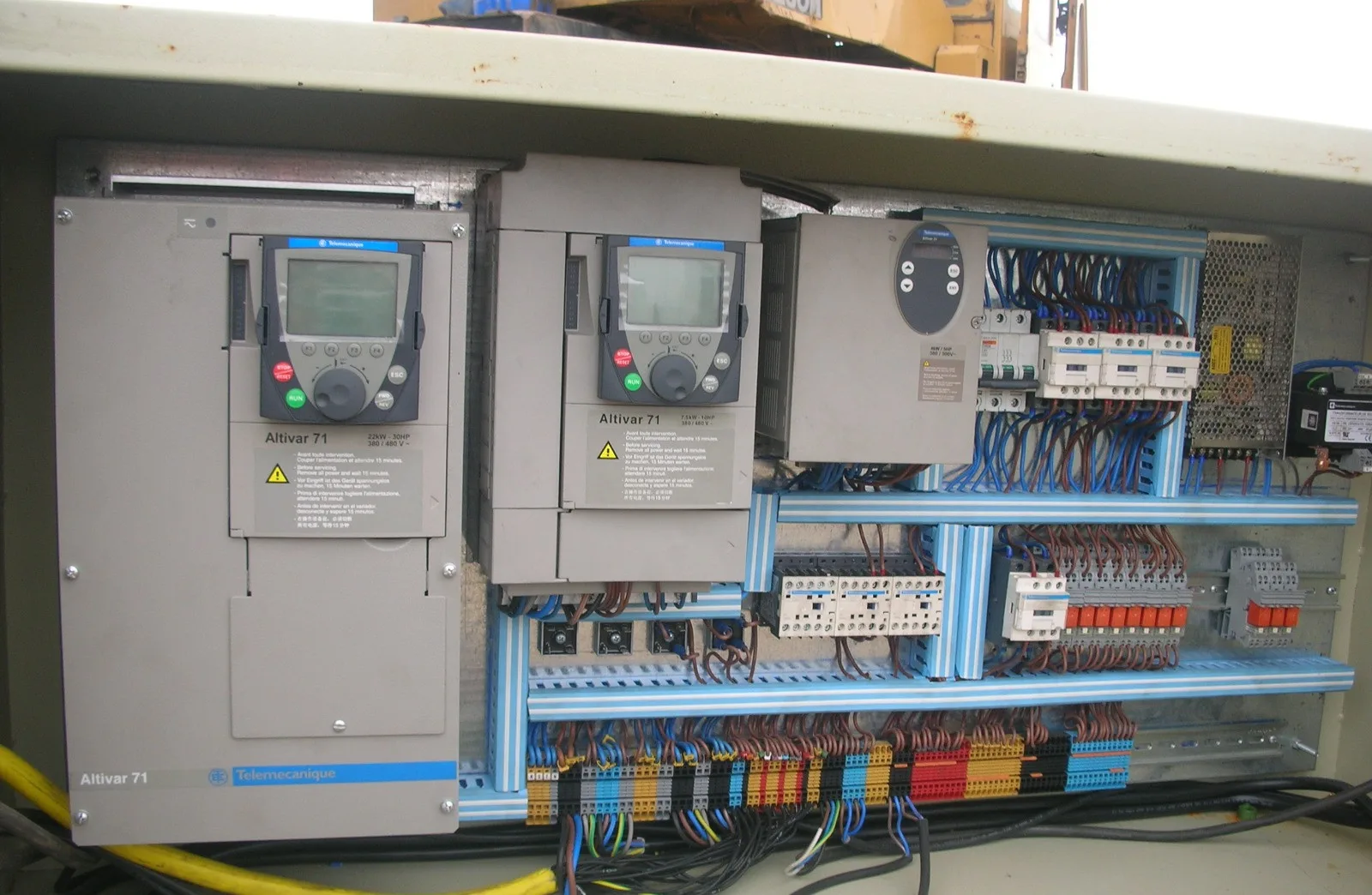
The control station and the drives must match. With pole-changing motors, two-step buttons give two fixed speeds: slow for positioning, fast for travel. Frequency inverters make speed stepless, from proportional joysticks on a belly box or in a cab, or even from two-step buttons with a control mode in which one step holds the speed and the other accelerates.
Stepless control and acceleration ramps reduce load sway and make it easier to set loads down gently. If you are planning a radio with joysticks, the drives must be inverter-controlled; our article on variable frequency drives on overhead cranes explains the options.
Standards and safety functions for every control station
Whatever the control station, the Machinery Directive requires hold-to-run controls for the movements of lifting machinery (Annex I, 4.2.1): when the operator releases the button or joystick, the motion stops. Only where there is no risk of the load or the crane colliding may a movement run to a preset position without the operator holding the control. Two harmonized standards set out the details:
- EN 13557: controls and control stations of cranes, covering layout, direction of actuation, symbols, ergonomics and cabs.
- EN 60204-32: electrical equipment of hoisting machines, including emergency stop, control circuits and radio (cableless) control.
In practice, every control station needs an emergency stop within easy reach; the direction symbols on the pendant or transmitter should match markings on the crane; and where a crane has several control stations, a selector, often key-operated, must ensure that only one can command movements at a time. How limit switches and overload protection interact with the controls is covered in overhead crane safety devices; the wider legal framework is explained in overhead crane standards in Europe.
Choosing overhead crane controls: decision table
| Situation | Suitable control | Why |
|---|---|---|
| Workshop, light loads, short travel | Pendant | Simple, robust, low cost |
| Operator slings and moves the load alone | Radio remote | Free position, clear view |
| Machines or stock along the travel path | Radio remote | No walking beside the load |
| Long spans, multi-shift operation | Cab | Ergonomics and overview |
| Hot, dusty or hazardous floor areas | Cab | Operator out of the hazard zone |
| Occasional maintenance lifts | Pendant | Always ready, no batteries |
| Radio as main control | Radio plus backup pendant | Work continues if the radio fails |
Combinations are common. A backup pendant keeps the crane usable while a transmitter is being repaired; a radio on a cab-operated crane allows maintenance work or occasional use without an operator in the cab. The selector rule described above applies in every case.
Operator training and safe practice
No control concept replaces a trained operator. In the EU, the Work Equipment Directive 2009/104/EC requires employers to train the people who use work equipment, and national rules add detail: BetrSichV and DGUV Vorschrift 52 in Germany, the İş Ekipmanlarının Kullanımında Sağlık ve Güvenlik Şartları Yönetmeliği in Türkiye. Training should cover the specific control station, not just crane operation in general.
Before each shift, the operator should check that:
- the emergency stop halts all motions
- the upper hoist limit switch responds
- the brakes hold and the directions match the markings
- pendant cable and strain relief are undamaged, or the transmitter housing, battery and label are in order
- the horn or warning light works
In operation: keep the load in sight at all times, never move loads over people, switch the transmitter off and remove the key before putting it down, and hang the pendant clear of traffic routes. Include the control components in every crane's periodic inspection and maintenance plan, for example as part of our maintenance and technical support.
Our approach to crane controls
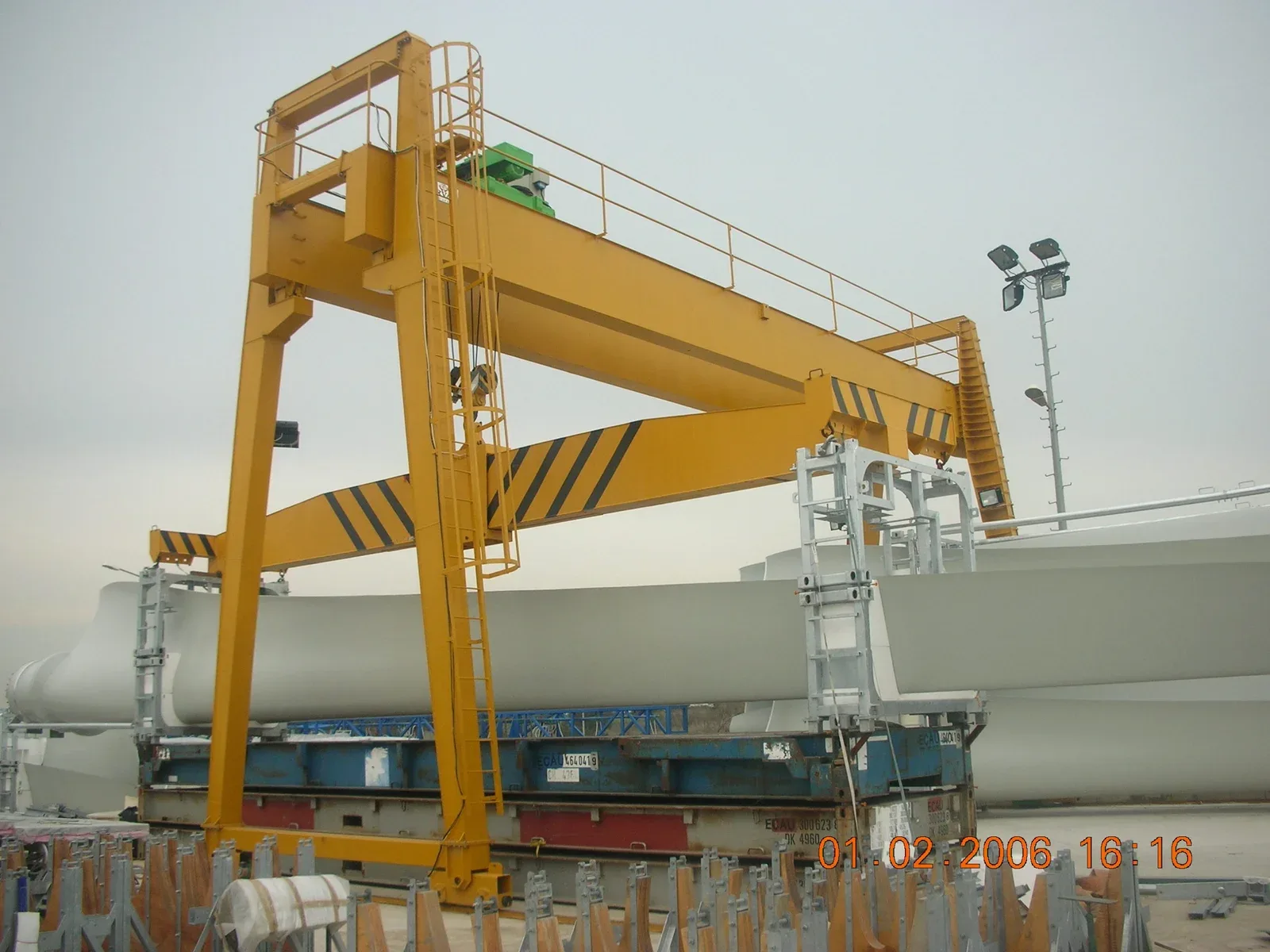
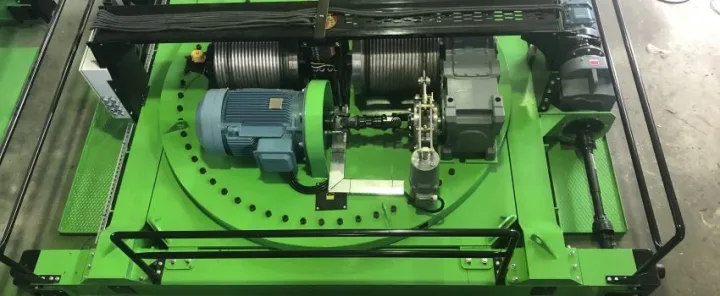
The Ervan Cranes overhead crane range covers single and double girder cranes from 1 to 100 t. Our product groups also include gantry cranes and overhead cranes with a 360° rotating trolley, among them a rotating-trolley crane with an operator cab.
Which control station a crane receives is decided per project in the technical design, together with load, span, lifting height and duty class, and the same team that designs the crane installs and commissions it. Operator training is part of our maintenance and technical support service, alongside periodic maintenance and breakdown response. The reference standards listed on our CE attestation of compliance (ECP.25.02.C0045) include EN 13557, EN 60204-1 and EN 60447.
Frequently Asked Questions
Is a radio remote as safe as a pendant?
Yes, provided the system meets EN 60204-32 and EN 13557 and is used correctly. Industrial crane radios stop the crane when the signal is lost and pair each transmitter with one crane. The remaining risks, such as operating without a clear view or mixing up transmitters, are managed through training and clear labelling.
Can a radio remote be retrofitted to an existing crane?
Usually, yes. The receiver is wired into the existing control panel, its stop function is integrated into the safety circuit, and the crane is function-tested before use. Joysticks provide stepless speed only with inverter drives; on cranes with two-speed motors, a pushbutton transmitter with two-step buttons is the usual choice. Wiring diagrams and operating instructions must be updated.
When is an operator cab necessary?
There is no fixed rule; the decision follows from the risk assessment and the operating profile. A cab is typically justified by long spans and travel distances, multi-shift operation, precise handling of heavy loads, or floor areas people should not enter. For occasional use, a radio remote is usually more practical.
What happens if the radio signal is lost or the battery runs flat?
The receiver stops the crane as soon as it no longer receives valid signals, and the brakes hold the load. Most transmitters warn the operator well before the battery is empty. Keep a charged spare battery at hand, and consider a backup pendant if the crane must be available at all times.
Planning a new crane? Request a quote and tell us who will operate it, from where and for how many hours a day; we will build the control concept into our proposal.