
Product Catalogue · 04 / 05
Jib Cranes
Slewing-arm jib cranes for point-to-point loading and unloading.
- 360° slewing
- Compact footprint
- Fast installation
Overview
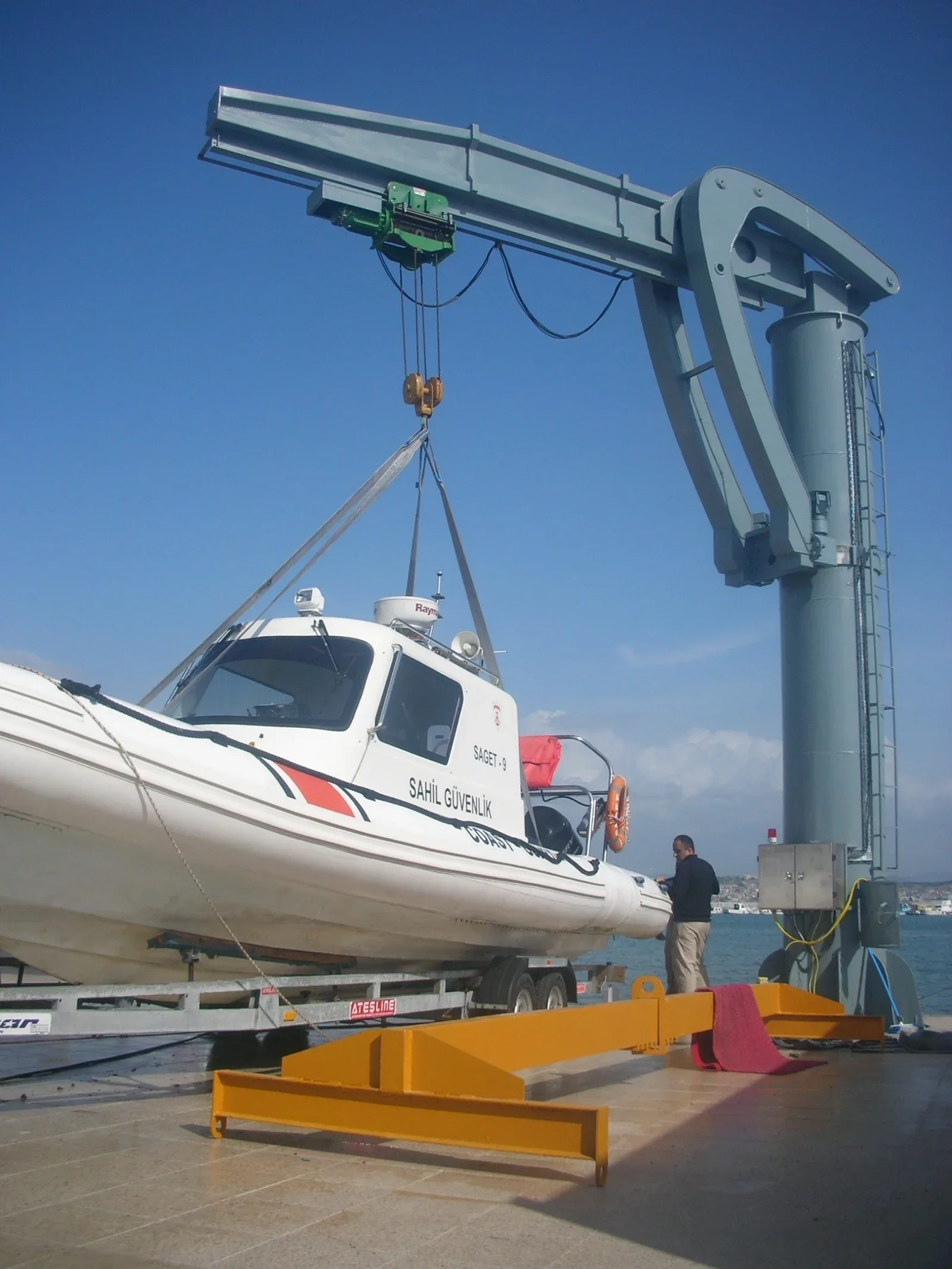
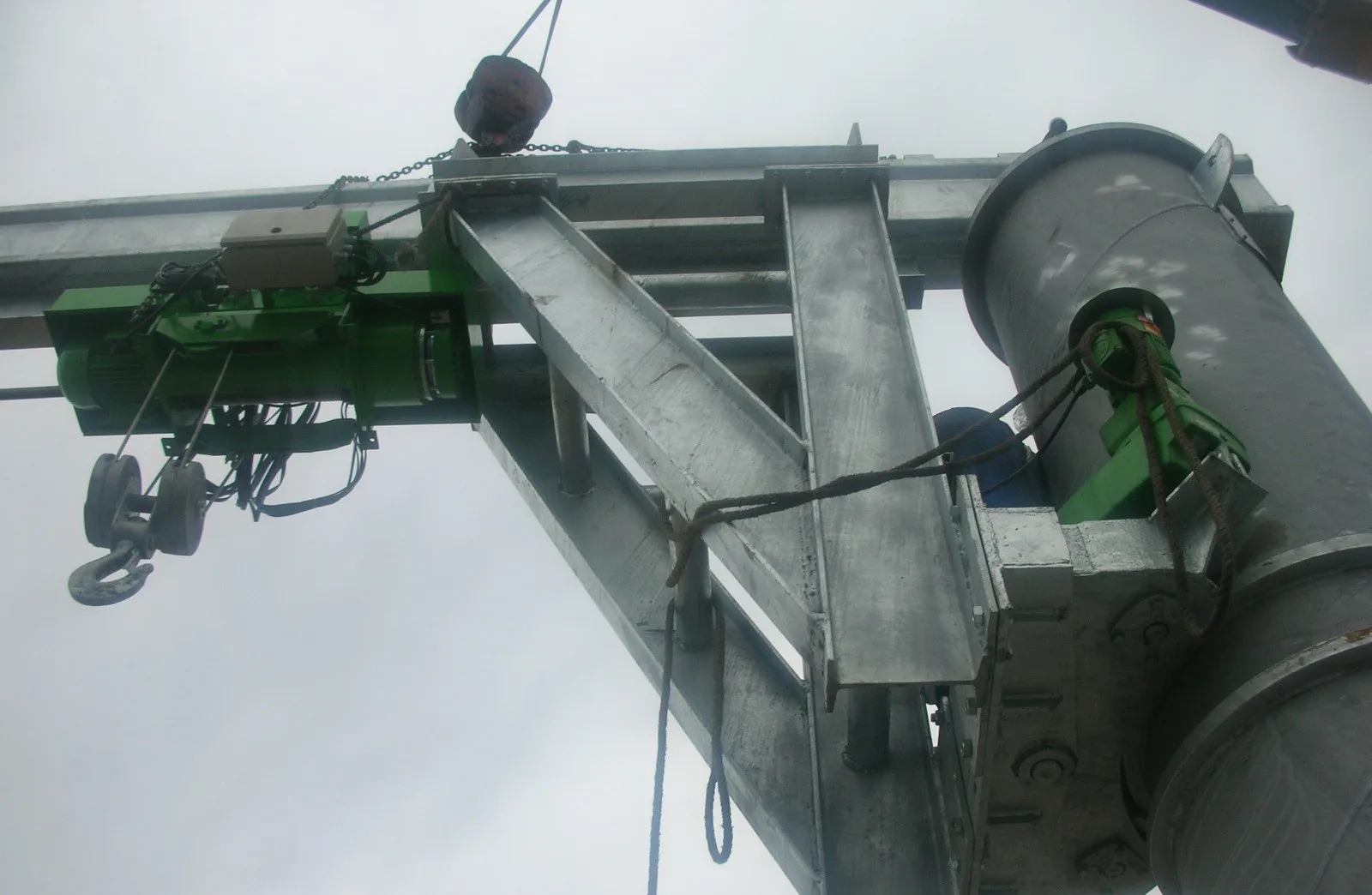
Jib cranes carry loads within a working radius using a hoisting group on an arm that slews around a pillar or wall bracket. A compact solution for workstations, loading points and quays.
Applications
- Workstation lifting
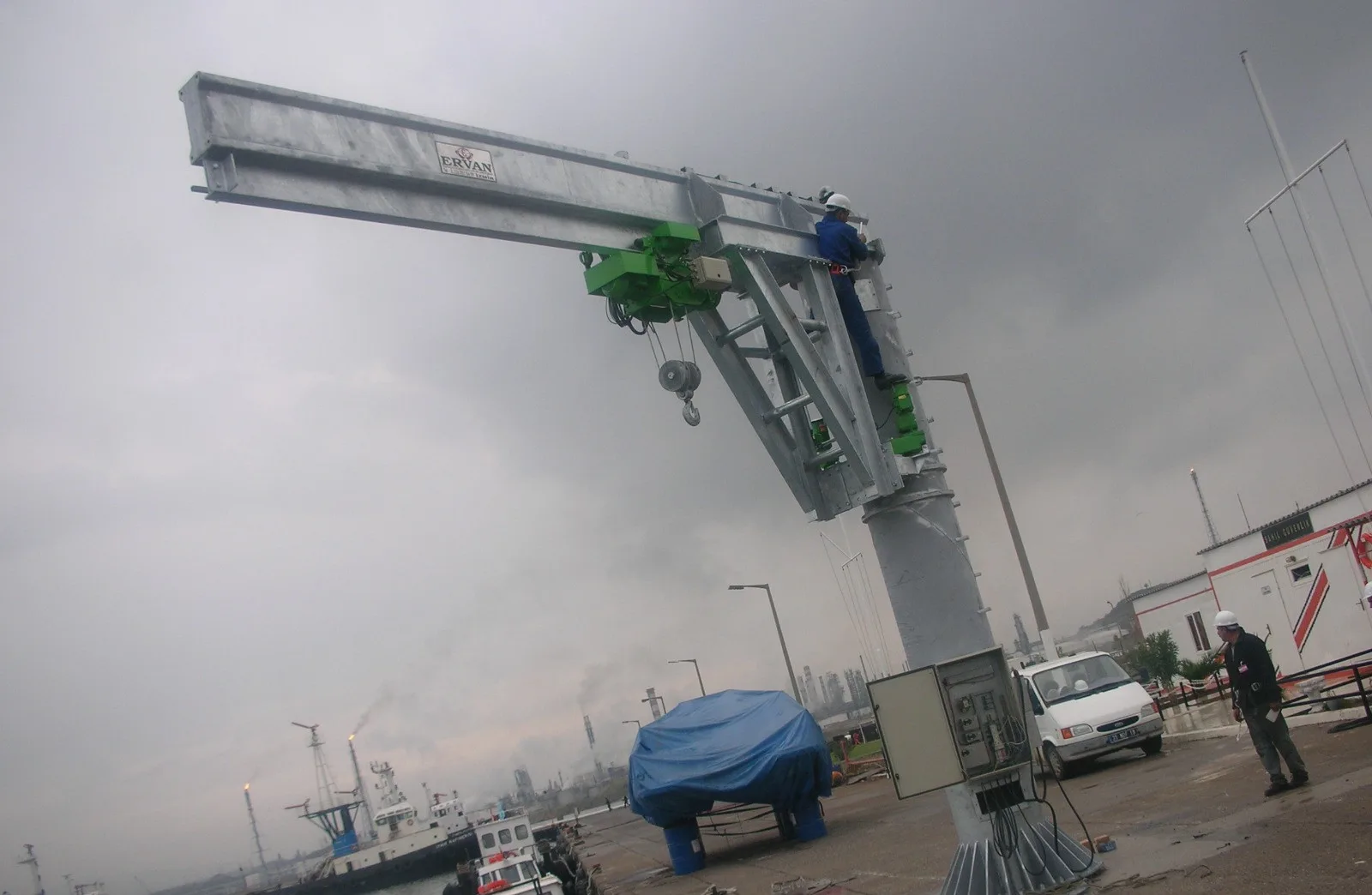
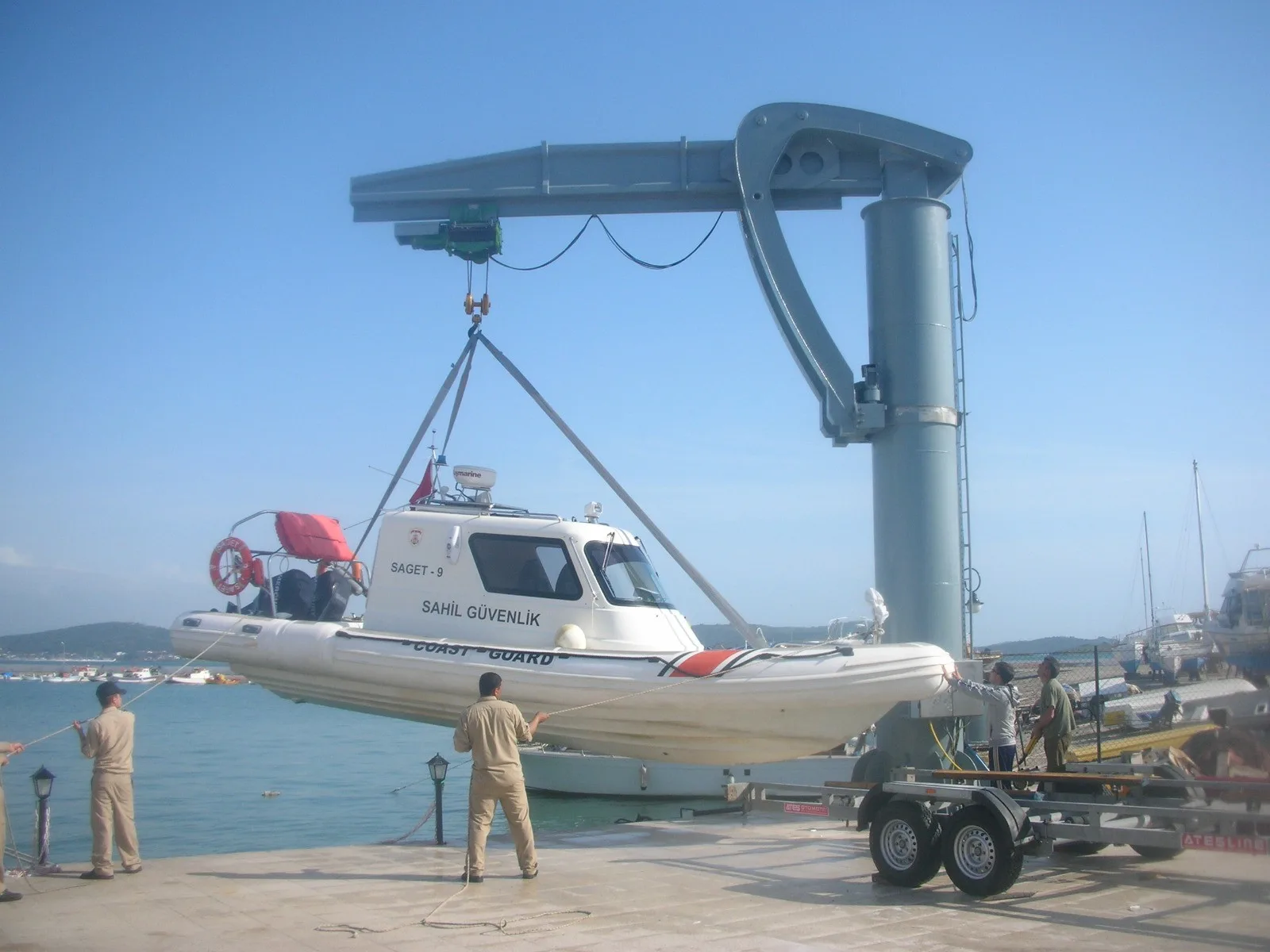
- Quays and marinas
- Loading / unloading points
- Maintenance stations
Technical Specifications
| Lifting capacity | Determined per project |
|---|---|
| Working radius | Determined per project |
| Slewing range | 360° |
| Type | Pillar type; wall type by project |
| Control options | Determined per project |
| Operating environment | Indoor / outdoor (galvanized option) |
Engineering Advantages
- 01
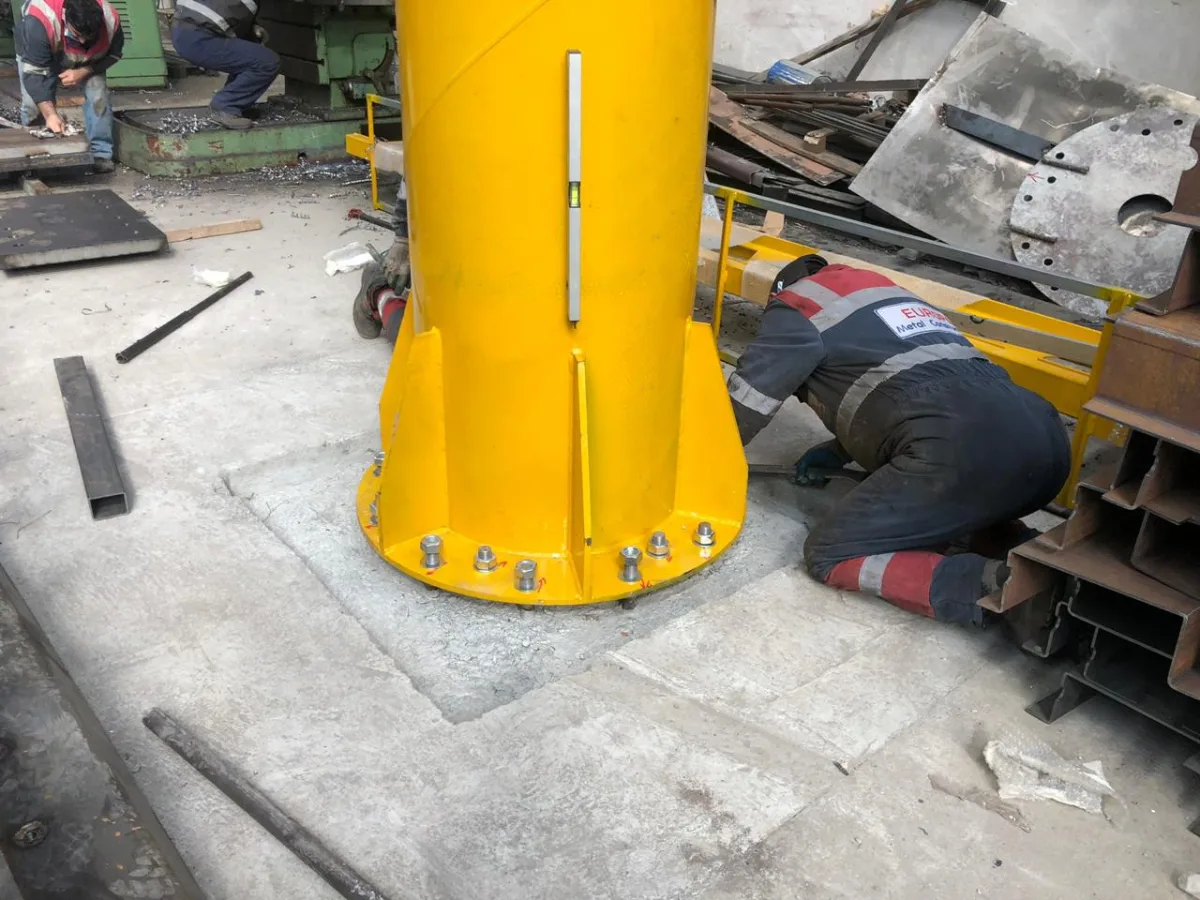
Compact installation: small footprint, independent foundation.
- 02
Fast installation and commissioning.
- 03
Hot-dip galvanized option for marine and outdoor settings.
Gallery



Frequently Asked Questions
01 What is a jib crane?
A jib crane consists of a horizontal arm (boom) that slews around a pillar or a wall bracket, with a hoist travelling along the arm. It lifts and lowers loads around a fixed working point; the arm length and slewing angle define the area it covers.
02 Where are jib cranes used?
For machine and workstation loading, assembly stations, loading docks, maintenance workshops and independent lifting at points an overhead crane cannot reach or is busy elsewhere. With suitable surface protection they are also used outdoors, for example on jetties and in harbours.
03 Jib crane or overhead crane — which one?
A jib crane gives fast, independent lifting within a circular area around a fixed point; an overhead crane serves the whole rectangular area of its runway. For repetitive work at a single station a jib crane fits; where loads must travel along the building an overhead crane does. The two are often used together.