Technical Guides 7 min read
Overhead crane components: what each part does and what to check
Bridge girder, end trucks, trolley, hoist, drives, controls, power supply and safety devices: what each overhead crane component does, how it is built and where it wears.
Ervan Cranes Engineering
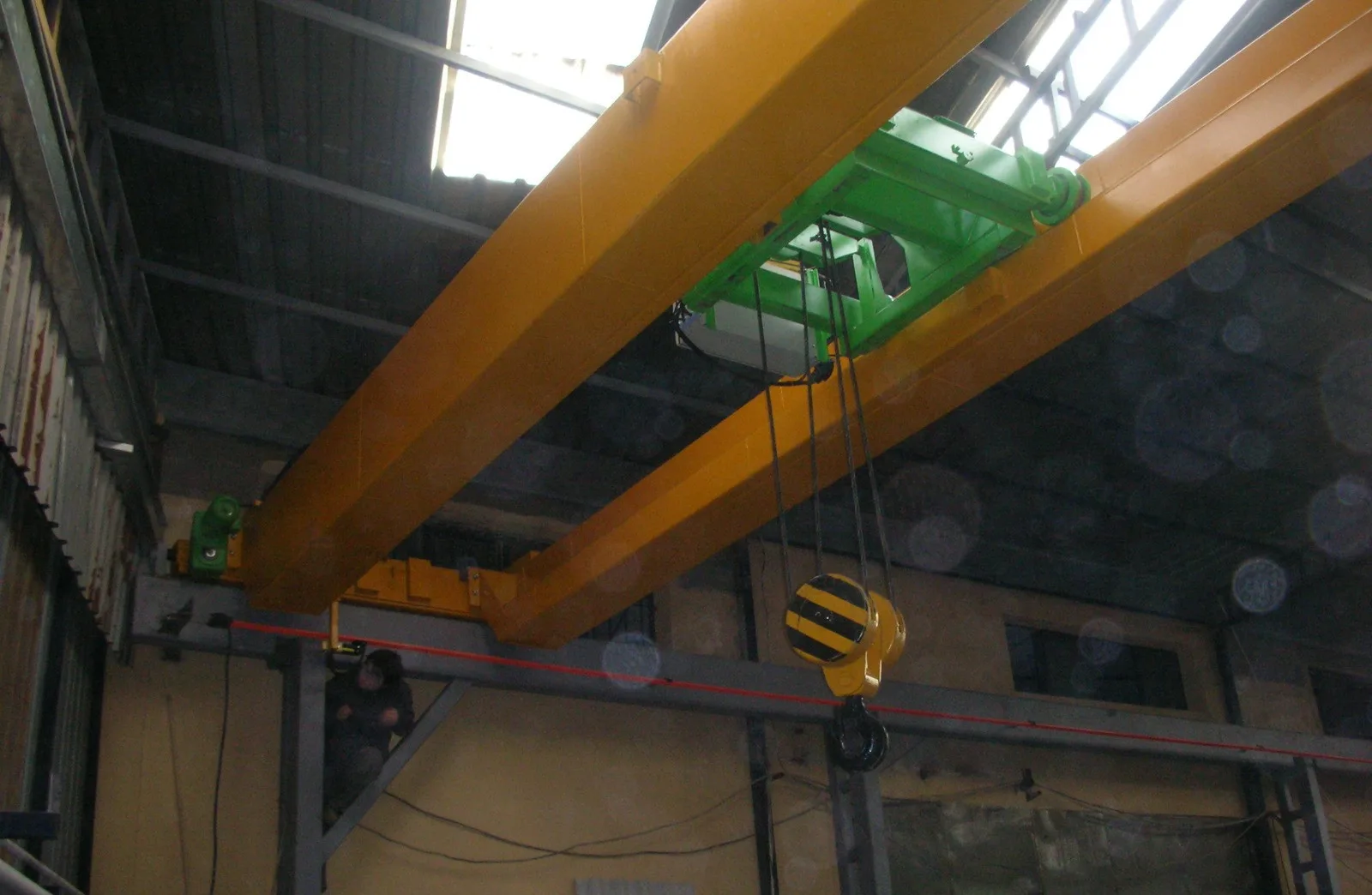
The main overhead crane components are the bridge girder or girders, the end trucks with wheels and travel drives, the trolley with its hoist, the controls, the power supply and the safety devices. The runway is usually part of the building. Knowing what each part does and where it wears makes specifying, inspecting and ordering spares far easier.
How overhead crane components work together
An overhead crane moves its load along three axes. The hoist lifts and lowers it, the trolley carries it across the span, and the bridge travels the length of the hall on the runway rails. Each motion has its own drive, brake and limit switches, which is why inspections look at each one separately.
The parts of an overhead crane fall into six assemblies:
- Bridge girder(s): span the hall and carry the trolley.
- End trucks: carry the bridge on its wheels and house the long travel drives.
- Trolley and hoist: travel along the girder and lift the load.
- Controls: electrical panel plus pendant, radio remote or cab.
- Power supply: conductor bar along the runway, festoon on the bridge.
- Safety devices: overload protection, limit switches, buffers, emergency stop.
Runway beams, rails and end stops are normally designed as part of the building rather than the crane. Their alignment acts directly on the wheels, so the crane runway requirements deserve the same care as the crane itself.
Bridge girder: box section or rolled beam
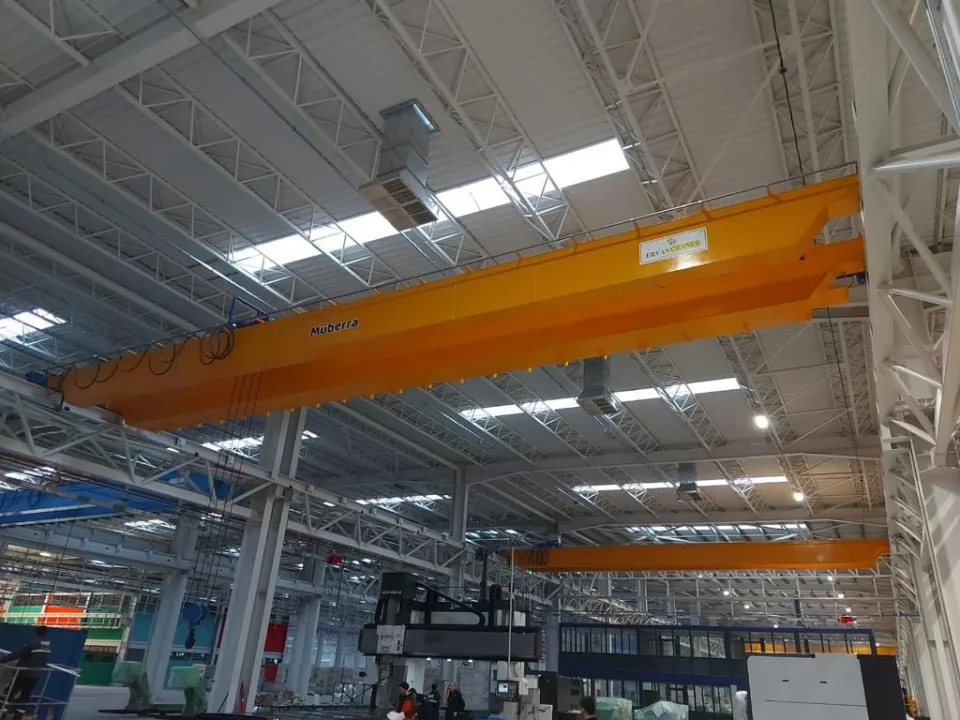
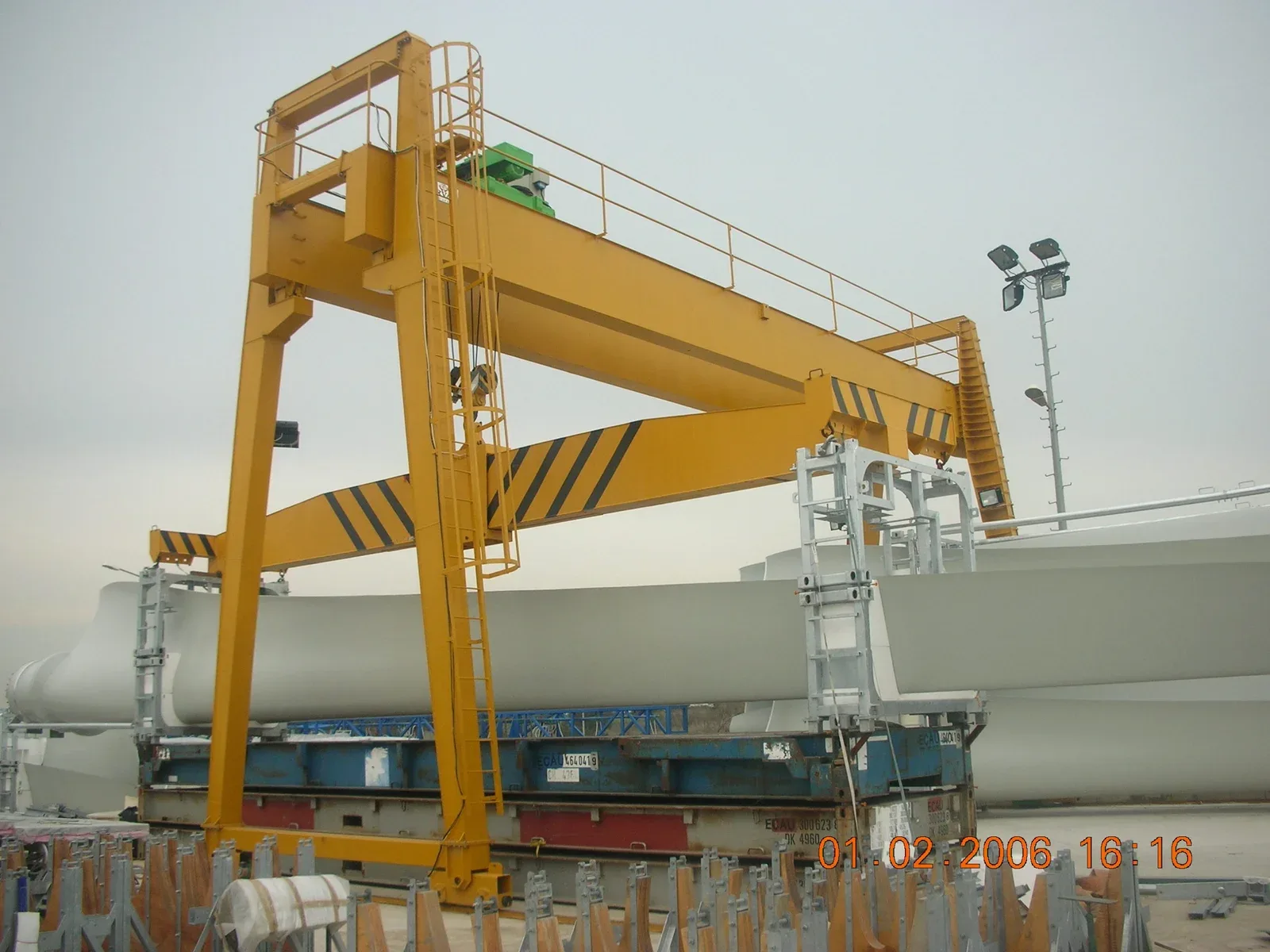
The bridge girder carries the trolley, hoist and load across the span and passes every force on to the end trucks. On a single girder crane, the hoist trolley runs on the girder's bottom flange. A double girder crane has rails on top of two girders: the trolley runs on them and the hook hangs between the girders, which gains hook height and suits higher capacities and longer spans.
Rolled sections, meaning standard I or H beams, are simple and economical for lighter loads and shorter spans. Box girders are welded from plates (two webs, top and bottom flanges, internal diaphragms) and provide the torsional and lateral stiffness that large spans and capacities need. Many girders are built with a slight upward camber so that the trolley track stays close to level under load.
Typical findings at inspection are cracks at welds and at the end truck connections, dents from impacts and corrosion. On single girder cranes, the bottom flange also needs checking for wear and deformation where the trolley wheels run.
End trucks, wheels and long travel drives
End trucks (end carriages) are bolted or welded to the girder ends and carry the crane on its wheels. These are usually double-flanged steel wheels in rolling bearings, although some designs guide the crane with horizontal rollers instead of flanges. Wheel diameter is chosen to suit the wheel load and the rail, so wheel and rail are always specified together.
The long travel drive is typically a geared motor mounted on a wheel shaft, with a spring-applied brake that engages when power is cut. Smaller cranes usually have one driven wheel per end truck. Pole-changing motors provide a slow positioning speed; frequency inverters add smooth ramps that reduce load swing and wear on wheels, gearboxes and the runway.
Wheels and rails wear in tandem. If the runway is out of line or the driven wheels differ in diameter, one side of the bridge runs ahead, the crane travels skewed and the flanges grind against the rail head. Check flange and tread wear, bearing noise, the brake air gap, gearbox oil leaks and the buffers that meet the runway end stops.
Trolley and hoist: the lifting unit
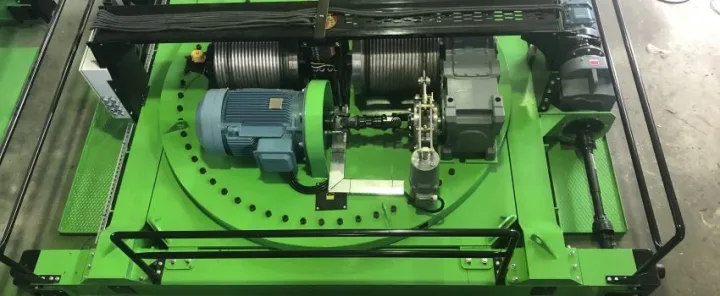
The hoist lifts and holds the load; the trolley, also called the crab, moves it across the span with its own geared motor, brake, wheels, buffers and limit switches. On single girder cranes, both usually form one compact unit. On double girder cranes, the trolley is a wheeled frame carrying either a compact hoist or a separately mounted motor, gearbox and drum.
Drive train and holding brake
The hoist motor drives the rope drum through a gearbox. The holding brake is spring-applied and electrically released, so it closes whenever the motor stops or the power fails. Inspections cover the brake air gap and lining wear, gearbox oil level and leaks, and any new noise from bearings or gears.
Drum, rope or chain, and hook block
On a wire rope hoist, the rope winds onto a grooved drum and runs through sheaves in the hook block; the reeving shares the load between several rope falls. The rope is assessed against the discard criteria of ISO 4309: broken wires, loss of diameter, corrosion, kinks and other deformation. Drum and sheave grooves wear with the rope, and the required safety turns must remain on the drum with the hook at its lowest point.
A chain hoist replaces drum and rope with a hardened load chain on a pocketed sprocket and is typically used for lighter capacities. Its key check is chain wear and pitch elongation against the maker's limits. On both types, the hook must be free of cracks and deformation, with its throat opening within limits and a working safety latch.
Control system and power supply
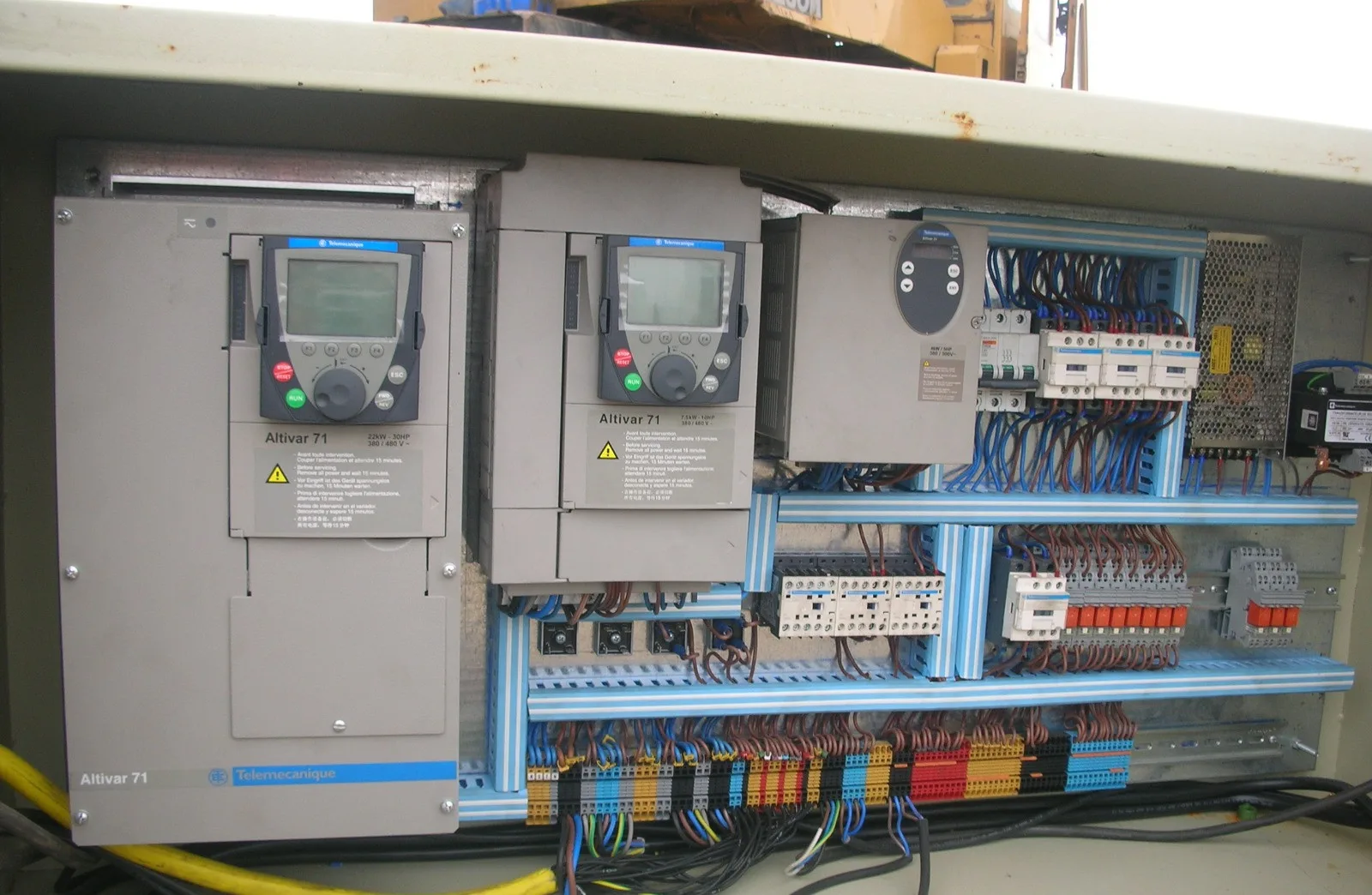
The control panel holds the mains contactor, contactors or frequency inverters for each motion, the control voltage supply and protective devices. The operator works the crane from a pendant, a radio remote or a cab, depending on span, duty and how close the operator can safely stand to the load. Requirements for the electrical equipment of cranes are set out in EN 60204-32.
Power reaches the crane in two stages. Along the runway, an enclosed conductor bar with sliding current collectors is the usual indoor solution, and a lockable mains disconnecting switch isolates the whole line. Across the bridge, a festoon system (flat cables hanging from small trolleys in a track) feeds the trolley and hoist. Our comparison of festoon systems and conductor bars explains both options.
Worth checking regularly: collector shoes, the protective earth collector, chafed festoon cables, and the pendant cable with its strain relief.
Safety devices built into the crane
- Overload protection: required under the Machinery Directive for cranes with a rated load of 1,000 kg or more.
- Hoist limit switches: operational upper and lower limits, often backed by an independent emergency upper limit.
- Travel limit switches, buffers and end stops for bridge and trolley.
- Emergency stop: halts all motions, usually by opening the mains contactor.
- Fail-safe brakes and a hook safety latch.
Where several cranes share a runway, anti-collision devices are usually added. Our guide to overhead crane safety devices explains how each one works and how it is tested.
Where each component wears: quick reference
| Component | Function | Check for |
|---|---|---|
| Bridge girder | Carries trolley and load | Weld cracks, deformation, corrosion |
| Wheels | Carry bridge and trolley | Flange and tread wear, bearings |
| Travel drives | Move bridge and trolley | Brake air gap, oil leaks |
| Hoist brake | Holds the load | Lining wear, air gap |
| Wire rope / chain | Carries the load | Broken wires, diameter loss, elongation |
| Drum and sheaves | Wind and guide the rope | Groove wear, rope guide |
| Hook block | Connects the load | Throat opening, latch, swivel |
| Controls | Command the motions | Contact wear, pendant, emergency stop |
| Power supply | Feeds the crane | Collector shoes, cables |
| Buffers | Absorb end impacts | Cracks, loose fixings |
Replacement criteria for these parts are covered in our article on overhead crane wear parts.
How Ervan Cranes supports you after delivery
Ervan Cranes designs and builds single and double girder overhead cranes from 1 to 100 t at its facility in Torbalı, İzmir. Each crane is engineered to its load, span, lifting height and duty class, and the team that designs it also commissions it. After handover, our spare parts service supplies wheels, wire ropes, hook blocks, brakes and control components, while our maintenance and technical support covers periodic maintenance, breakdown response and operator training.
Frequently Asked Questions
What is the difference between a trolley and a hoist?
The hoist is the lifting mechanism: motor, gearbox, drum or chain sprocket, brake and hook block. The trolley is the carriage that moves the hoist along the bridge. On single girder cranes the two are usually one compact unit; on double girder cranes the trolley is a separate frame that carries the hoist.
Which parts of an overhead crane wear first?
Parts that rub, roll or switch under load: wire rope or chain, brake linings, wheel flanges, sheave grooves, current collectors and contactor contacts. How fast they wear depends on the duty class, the load spectrum, the environment and the runway alignment. Replace them according to the condition found at inspection, not by the calendar alone.
Can components from another brand be fitted?
Often yes, provided the replacement matches the original specification: rated load, duty class, dimensions, mounting interface and electrical data. Safety-relevant parts such as brakes, hooks, limit switches and overload devices must be equivalent, and the change should be documented. Fitting a different hoist or changing the capacity alters the crane's design basis and calls for an engineering check, updated documents and, where national rules require it, an inspection before use.
What information do I need to order a spare part?
Start with the nameplates of the crane and the hoist: manufacturer, serial number, year of manufacture and rated load. For a wire rope, add diameter, construction, lay, grade and length; for a wheel, diameter, tread width, flange type and whether it is driven. Photos and measurements of the old part prevent wrong deliveries.
Planning a new crane or replacing a part?
Tell us the load, span, lifting height and how the crane will be used, or, for spares, the nameplate data and a photo of the part. Request a quote and we will come back with a proposal for your crane.