Technical Guides 9 min read
Overhead crane cost: what really determines the price
Why overhead cranes have no list price, which factors drive the cost – from duty class to runway and installation – and what to send so that quotes are accurate and comparable.
Ervan Cranes Engineering

There is no list price for an overhead crane: overhead crane cost follows from the engineering, so the price is determined per project. The main drivers are capacity, span, lifting height and duty class, followed by the hoist, controls, power supply, environment, runway, installation and documentation. Defining these clearly is the quickest way to a reliable quote.
Why there is no list price for an overhead crane
A catalogue can list capacities, but not an overhead crane price: two cranes with the same capacity can be very different machines. Take two 10 t cranes: one spans a narrow workshop and lifts a few times a day; the other spans a wide steel stockyard bay and runs two shifts.
Each of the overhead cranes we manufacture is engineered to its load, span, lifting height and duty class, then adapted to the building, the site and the equipment required. That is why a serious supplier asks questions before naming a figure.
The four basics that drive overhead crane cost
Four values define the size of the crane and, with it, the material and component cost.
- Capacity: sets the hoist size, reeving, girder section, end carriages and wheels – and the wheel loads that the runway and building must carry.
- Span: a longer span needs a deeper, heavier girder to keep deflection within limits. Beyond a certain combination of span and load, a double girder design becomes the sensible choice.
- Lifting height: more height needs more rope on the drum, which means a longer drum or a different hoist design.
- Duty class: describes how often and how heavily the crane works. A higher mechanism group (for example M5 instead of M4) needs larger motors, gearboxes, brakes and rope drives, and the steel structure must be verified for more load cycles.
Because two cranes with the same capacity look alike on paper, duty class is easy to underestimate. Our article on crane duty classification under FEM, ISO and CMAA explains how it is determined, and the guide to overhead crane dimensions shows how to measure span and heights correctly.
Design choices: girder type, hoist, controls and power supply
Single or double girder
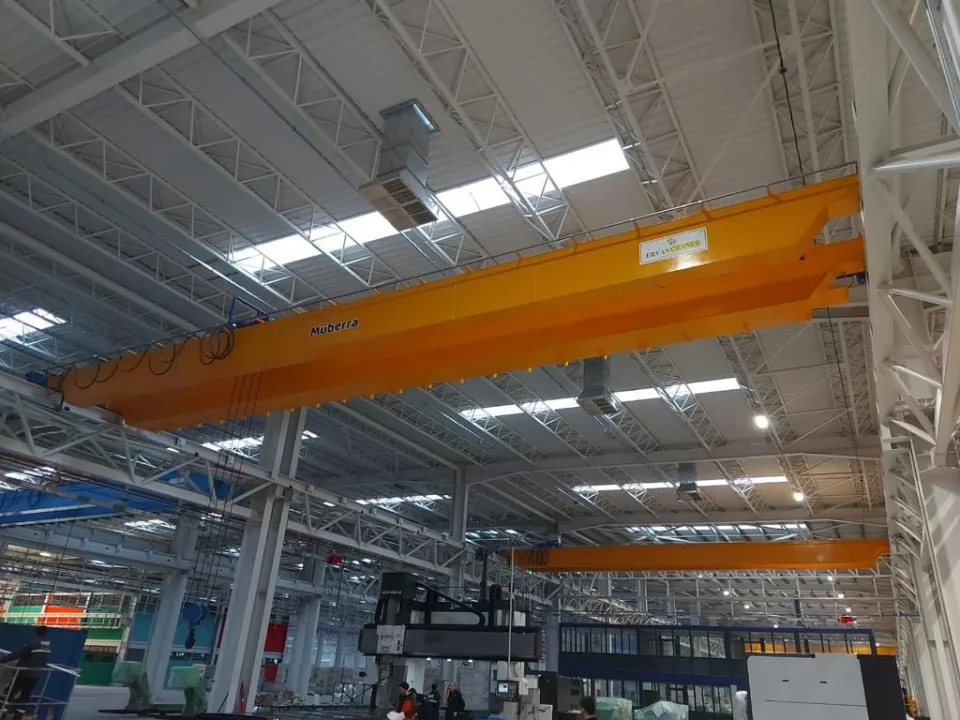
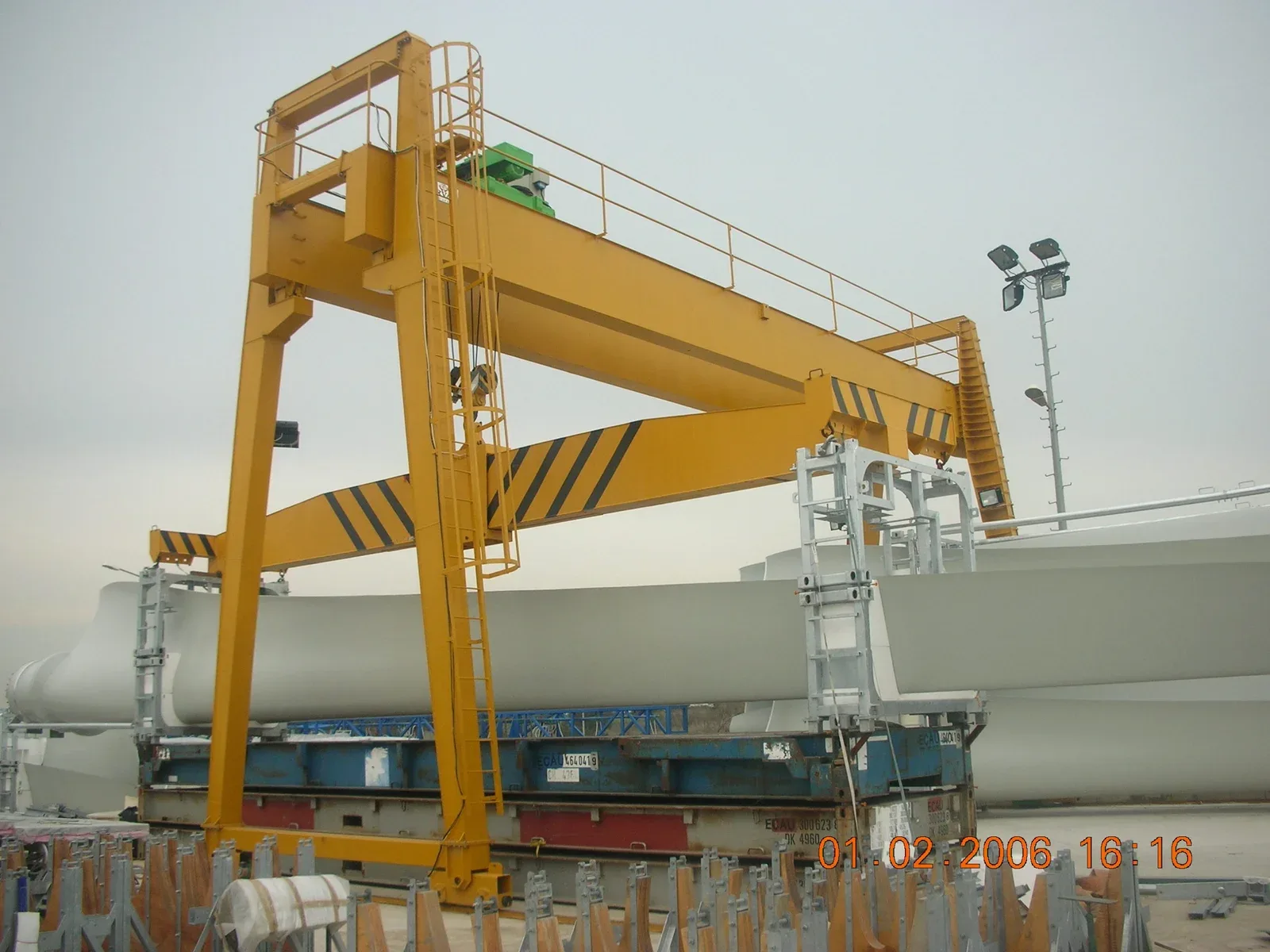
For lighter loads and moderate spans, a single girder crane needs less steel, lighter end carriages and a simpler trolley, so it usually costs less. A double girder crane uses more material but is often the only sensible option for high capacities, long spans or intensive duty, and it offers more hook height and better maintenance access.
Hoist type and speeds
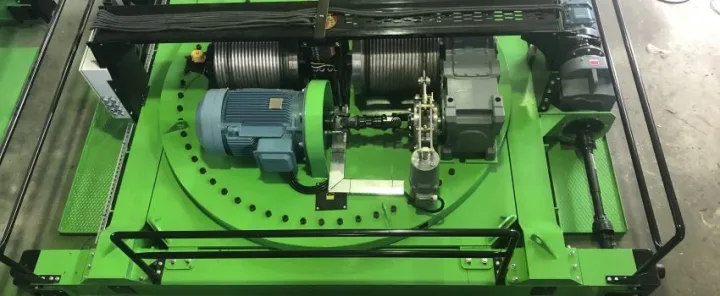
A standard series wire rope or chain hoist is the economical solution for most cranes; a project-specific crab (open winch trolley) is used for heavy capacities, large lifting heights or special lifting tasks. Every extra requirement adds cost: higher speeds, a creep speed for precise setting down, an auxiliary hoist, two hoists working in tandem or a low-headroom design to gain hook height.
Controls and drives
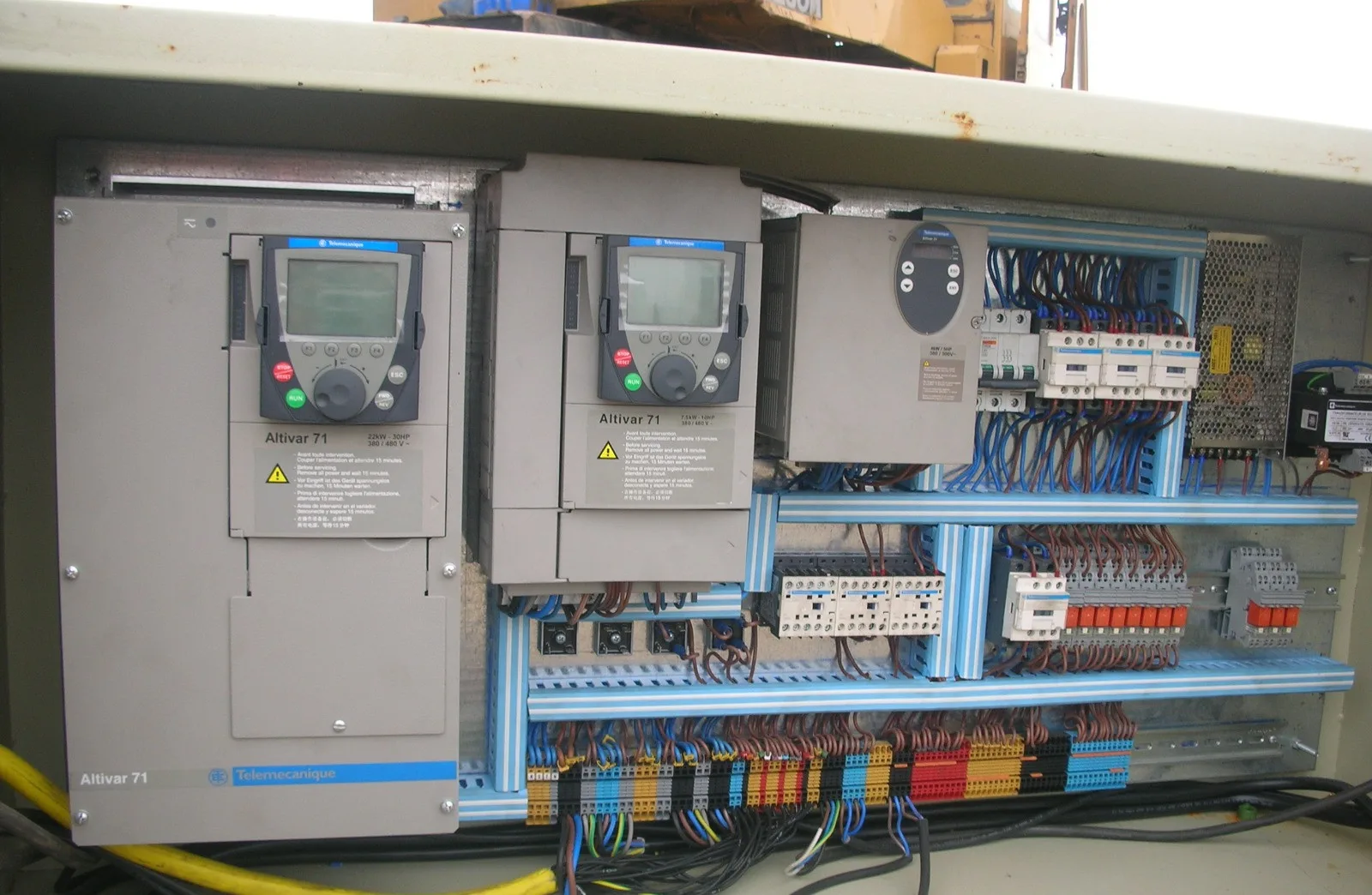
A pendant is the simplest control. A radio remote costs more but lets the operator stand clear of the load, and an operator cab is a larger investment that pays off on long spans, in intensive duty or in hot and hazardous areas. Variable frequency drives (VFDs) on the hoist and travel motions give stepless speeds, smooth starts and less load swing, which reduces wear on brakes, gearboxes and wheels. Load displays and anti-sway control are further options with their own cost.
Power supply
An enclosed conductor bar on the runway and a festoon system for the trolley are the common combination; long runways, several cranes on one line, high currents or outdoor use raise the effort noticeably. Every quote should state who supplies and installs the runway line – the technical differences are covered in festoon vs conductor bar.
Environment, runway and site: costs outside the crane
- Environment: outdoor cranes need a coating system for the site's corrosivity category (ISO 12944), weather-protected motors and panels, and storm securing. Heat, dust or aggressive vapours call for heat shields, higher protection ratings or special materials. Cranes for explosive atmospheres (ATEX) are a separate, considerably more complex design with certified explosion-protected components.
- Runway: a new runway – beams, rails, brackets, end stops – is a cost block of its own and may come from the crane manufacturer or the building contractor; the quote must say which. An existing runway has to be surveyed for span, straightness and rail level. Corrections are an extra item, but a misaligned runway causes wheel-flange wear and skewing for the crane's entire life.
- Site and logistics: distance, transport of long girders (in one piece or as bolted sections), access into the hall, mobile crane hire, access platforms and installation outside production hours all affect the price. Export projects add seaworthy packing and the costs that follow from the agreed Incoterms.
- Documentation and inspection: the load tests required by the Machinery Directive – static with at least 1.25 × and dynamic with 1.1 × the rated load – need test weights or water bags. Add the declaration of conformity, an operating manual in the required language, test reports and any inspection that national rules require before first use.
Total cost of ownership: what the purchase price does not show
The purchase price is paid once; running costs accumulate over the crane's whole service life. Compare offers on these points too:
- Energy: efficient drives and VFDs cut starting currents, and regenerative units can return braking energy to the grid.
- Maintenance: periodic maintenance and statutory inspections recur at fixed intervals; walkways and platforms make them faster and safer.
- Spare parts: identifiable standard components are sourced quickly, while anonymous or discontinued parts can keep a crane out of service for a long time.
- Downtime: when the crane stops, every process that depends on it stops too. Estimate what an hour of standstill costs your plant and weigh it against the price gap between offers.
- Service life: a crane classified for its real duty reaches its design working period; an under-classified one wears out early.
How to compare crane quotes like for like
Offers can only be compared when they describe the same crane and the same scope. Put them side by side and check:
- capacity, span, lifting height and hook path stated identically
- duty class of structure and mechanisms (crane group A, mechanism group M) named – not just ‘heavy duty’
- hoisting, cross travel and long travel speeds, with or without VFD
- make and type of hoist, motors, drives, brakes and radio remote
- design standards (for example EN 15011 and EN 13001) and the documents supplied
- scope: runway, rails, power supply line, mains connection, transport, installation, mobile crane, test weights, load test, commissioning, training
- exclusions, delivery and installation schedule, payment terms and warranty conditions
- spare parts availability and service response after handover
The supplier side of the same decision is covered in how to choose an overhead crane manufacturer.
What to send for an accurate quote
The more complete your enquiry, the closer the first offer will be to the final price. Include:
- the heaviest load including lifting accessories, with its dimensions and type (coils, moulds, long profiles, pallets…)
- the span (rail centre to rail centre), or the hall width and column grid
- the required hook height, the rail level and the lowest obstacle under the roof
- the runway length, and whether a runway exists (rail type, beam size) or must be built
- the usage: lifts per hour, hours per shift, shifts per day and how often loads near capacity are lifted
- your control preference (pendant, radio remote, cab) and any need for precise positioning
- the environment: indoor or outdoor, temperature, dust, humidity, corrosive or explosive atmosphere
- the site location and its mains voltage and frequency, access for transport and installation, and the national inspection rules that apply
- hall drawings (plan and cross-section) and photos of the runway, columns and roof
Why the cheapest offer can turn out expensive
A low price is often the result of a smaller specification, not a smarter design. Typical patterns:
- Under-specified duty class: a hoist and structure sized for occasional use wear out early on a production line, and the class cannot be raised later without replacing major components.
- Costs shifted to you: runway, power line, test weights, mobile crane or mains connection left out of the scope.
- Missing documentation: without a declaration of conformity, CE marking and an operating manual, a crane cannot lawfully be put into service in the EU or Türkiye – and missing test reports complicate every later inspection.
Compare the cost over the crane's life, not just the figure on the first page.
How Ervan Cranes prepares a quote
Ervan Cranes does not work with list prices: every crane is engineered to its load, span, lifting height and duty class, so the price is determined per project. A quote starts with a needs analysis of the load, the building and the site, followed by the technical design.
Steel fabrication takes place at our facility in Torbalı, İzmir, and the team that designs the crane also installs, load-tests and commissions it. After handover we offer maintenance and technical support – periodic maintenance, breakdown response and operator training – as well as spare parts such as wheels, ropes, hook blocks, brakes and control components.
Frequently Asked Questions
Why do two overhead crane quotes differ so much?
Usually because they do not describe the same crane or scope. One may assume a lower duty class, slower speeds or simpler controls; another may include the runway, installation and load test that the first leaves out. Compare them point by point against your specification.
Does a higher duty class cost more?
As a rule, yes: mechanisms for a higher class are larger, and the structure must be verified for more load cycles. Over-specifying wastes money, but under-specifying usually costs more over the crane's life, so the class should follow the real usage pattern.
Is installation included in the price?
It depends on the offer, so get the scope in writing. Check whether transport, installation, mobile crane, electrical connection, load testing with test weights, commissioning and operator training are included, and what you must provide yourself.
How can I reduce cost without compromising safety?
Specify realistically: the capacity and speeds you actually need, the correct duty class and standard components where possible. Check early whether an existing runway can be reused, and fit installation into a scheduled shutdown rather than paying for night or weekend work. Never save on safety devices, documentation or duty class.
The quickest route to a reliable price is a clear specification. Use our quote request form to share your load, span, lifting height, usage and hall drawings – we will review the data, ask about anything missing and prepare an offer engineered for your application.