
Maintenance & Safety 9 min read
Overhead Crane Safe Operation: Operators, Rigging and Daily Checks
A practical guide to overhead crane safe operation: who may operate, pre-shift checks, rigging and sling angles, hand signals, leaving the crane safe and what must never be done.
Ervan Cranes Engineering
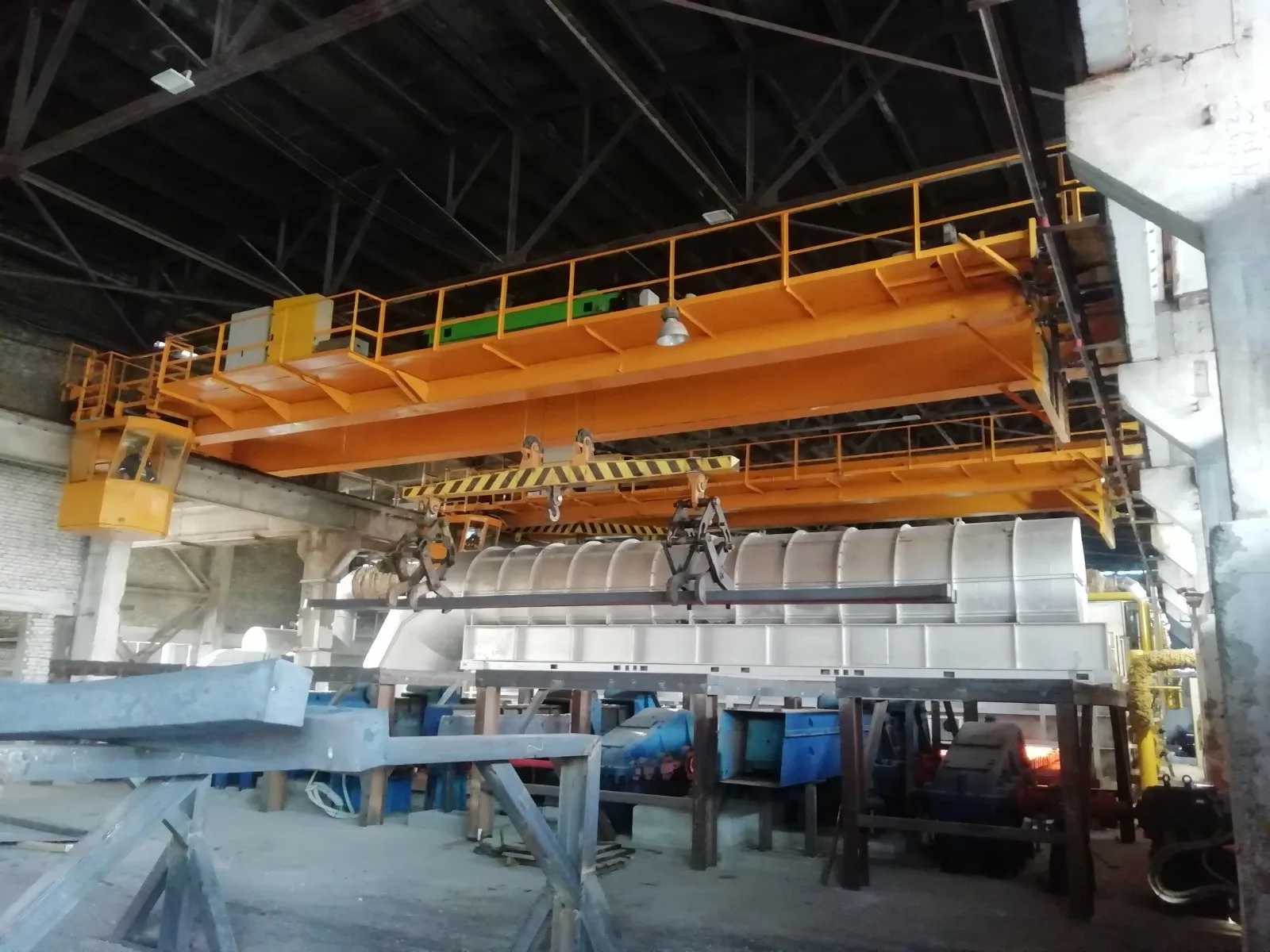
Overhead crane safe operation rests on four things: only designated, trained and competent people operate the crane; the operator checks it at the start of every shift; loads are rigged correctly, with known weight and sling limits; and every movement follows clear rules and signals. Nobody stands under a suspended load, nobody rides the hook, and a crane with a safety-related defect is taken out of use.
Who may operate an overhead crane?
Only people whom the employer has selected, trained and designated for the task should operate an overhead crane. The details are set by national law, so always check the rules where the crane is used. Some examples:
| Where | Main rules | What they require (examples) |
|---|---|---|
| European Union | Directive 2009/104/EC on the use of work equipment, transposed into national law | Adequate information and training for users, with specific training for equipment that involves specific risks; Annex II sets rules for using equipment to lift loads |
| Great Britain | PUWER 1998 (regulation 9), LOLER 1998 (regulation 8) | Adequate training for everyone who uses work equipment; every lifting operation properly planned by a competent person, appropriately supervised and carried out in a safe manner |
| Germany | BetrSichV (§ 12), DGUV Vorschrift 52 (§ 29) | Instruction before first use and at least yearly; operators at least 18, physically and mentally fit, instructed, with competence demonstrated to the employer and a formal assignment |
| Türkiye | Work equipment regulation (İş Ekipmanları Yönetmeliği, 2013); MYK communiqué 2018/1 | Equipment with specific risks used only by assigned persons; users trained before first use; MYK vocational qualification certificate “Köprülü Vinç Operatörü” (bridge crane operator, Level 3) mandatory since 11 November 2019, unless a matching vocational diploma or master craftsman certificate applies |
| United States | OSHA 29 CFR 1910.179 | Only designated personnel may operate; the operator avoids carrying loads over people; the upper limit switch is tried at the start of each shift |
Internationally, ISO 12480-1 describes a safe system of work for using cranes, ISO 15513 sets competency requirements for crane operators, slingers, signallers and assessors, and ISO 23853 covers the training of slingers and signallers. On a crane with a pendant or radio control, one person is often operator, slinger and signaller at once, so that person needs training for all three roles. Our guide to overhead crane controls compares the options.
What should the operator check before each shift?
Before the first lift, the operator walks round the crane and tests it without a load, so that obvious defects are found while the hook is still empty. The crane's operating manual has the definitive list; the table shows typical checks.
| Check | How | If it is not right |
|---|---|---|
| Work area and runway | Travel path and set-down area clear; no obstructions, unauthorised people or poor lighting | Do not start until the area is safe |
| Previous shift | Any reported defect, lock or “do not operate” tag? | Never operate a locked or tagged crane |
| Hook, safety latch, rope or chain | Visual: opened throat, cracks, broken wires, crushing, kinks; latch closes by itself | Do not use the crane; report it |
| Pendant or radio control | Housing, cable and direction labels intact; motion stops when a button is released; transmitter paired with this crane | Do not use the control; replace it |
| Emergency stop | All motions stop when pressed | The crane must not be used |
| Brakes | Hook does not creep on starting or stopping; bridge and trolley stop within their usual distance | Report it; do not use |
| Upper limit switch | Hook stops when inched into the limit, unloaded and at slow speed | Report it; do not use |
| Horn and warning light | Working | Report it |
| Slings and below-the-hook devices | Tag legible; no cuts, crushing, stretching or deformation | Take out of use |
An operator who finds a safety-related defect does not use the crane and reports it to the supervisor. What each device does is explained in our article on overhead crane safety devices, and the maintenance team's tasks are in our periodic maintenance checklist. The pre-shift check does not replace the statutory inspection by a competent person; see overhead crane inspection requirements.
Rigging basics: weight, centre of gravity and slings
A safe lift starts before the load is on the hook. The slinger should not signal a lift until four questions are answered:
- How heavy is the load? Take the weight from the label, the drawing or a scale. Slings, spreader beams, magnets and other below-the-hook devices also hang on the hook; unless the manufacturer states otherwise, the total must not exceed the crane's rated load. Our guide to below-the-hook lifting devices covers the options.
- Where is the centre of gravity? Position the hook directly above it; otherwise the load tilts or slides as it lifts.
- Is the sling suitable? Use only undamaged slings with a legible working load limit. Protect them at sharp edges, seat them in the bowl of the hook rather than on the tip, and check that the latch closes.
- Is the load secure? Fix loose parts, and never wrap the crane's hoist rope or chain around the load; the load is attached with slings.
How the sling angle increases leg force
As the legs of a multi-leg sling spread, the force in each leg rises. In a symmetrical two-leg sling, each leg carries half the load multiplied by 1/cos β, where β is the angle between the leg and the vertical.
| Angle to vertical (β) | Factor (1/cos β) | Force per leg for a 2 t load |
|---|---|---|
| 0° | 1.00 | 1.00 t |
| 30° | 1.15 | 1.15 t |
| 45° | 1.41 | 1.41 t |
| 60° | 2.00 | 2.00 t |
At 60°, each leg carries the full weight of the load. That is why multi-leg slings are rated for angle ranges (up to 45° and from 45° to 60° to the vertical) and must not be used at more than 60°. If the load is not shared equally between the legs, assume that only one leg of a two-leg sling, or two legs of a three- or four-leg sling, carry it.
How do you lift, travel and lower safely?
- Lift a little first. Raise the load a few centimetres and stop to check its balance, the seating of the slings and that the brake holds. If the load tilts, set it down and re-rig it.
- Keep the hook vertically above the load. Do not side-pull, drag a load along the floor or try to tear free a load that is stuck. An overhead crane is built for vertical lifting, and side pulls put forces on the girder, rope and drum that they are not designed for.
- Start and stop smoothly. Abrupt starts and stops make the load swing, and a swinging load can strike people or structures and strain the slings. Let it settle before the next movement, and guide it with a tag line if needed.
- Carry the load low. Lift it only as high as needed to clear obstacles. Never move it over people or unprotected workplaces, and sound the horn when the bridge starts and when the load approaches people.
- Do not stop on the limit switch. The hoist upper limit switch is a safety device; stop the hook by eye before it gets there. OSHA 1910.179 states that it shall never be used as an operating control. Never run into the emergency (second) upper limit in normal operation.
- Keep the emergency stop for emergencies. Press it when a motion does not stop as the button is released or when someone is at risk, not for routine stopping.
- Watch the wind outdoors. Stop work at the wind limit given in the operating manual, and whenever the weather prevents safe use.
- Plan tandem lifts. Lifting one load with two cranes needs a separate plan, coordination between the operators and one person in charge.
How should hand signals and communication work?
If the operator cannot see the whole path of the load, another person must guide them; Germany's BetrSichV and Türkiye's work equipment regulation both require this. Whatever the local rules, the same principles apply:
- Only one designated person gives signals, standing where the operator can see them clearly and where they are not at risk themselves.
- The operator obeys a stop signal at any time, whoever gives it.
- Signals are agreed before the lift. If the operator cannot carry out an instruction safely, they stop and ask for a new one.
- Slinger and signaller leave the danger zone before giving the signal to lift.
- Radio communication uses short, agreed commands.
National rules often prescribe their own signal set, for example Türkiye's safety signs regulation or Germany's ASR A1.3. ISO 16715 defines a basic set of crane hand signals so that crews from different countries understand each other; it does not replace national signals.
What should you do after use?
- Land the load; never leave it suspended. Remove slings and below-the-hook devices and store them where they cannot be damaged.
- Raise the empty hook clear of people and park the crane where it does not block walkways, doors or other cranes.
- Set all controls to zero and switch the crane off. Store a radio transmitter so that unauthorised people cannot switch it on, for example with its key removed.
- Secure outdoor cranes with the storm lock or rail clamps.
- Record any defects noticed during the shift and tell the next operator. Before maintenance or repair, the crane's isolator is locked off and tagged.
What must never be done with an overhead crane?
- Exceed the rated load, or “try” whether a load of unknown weight will lift.
- Stand or work under a suspended load, or move a load over people or unprotected workplaces.
- Lift people with the crane, or ride the hook, the load or a sling.
- Leave a suspended load unattended, unless access to the danger zone is prevented and the load is held securely.
- Bypass or readjust the overload limiter, a limit switch or the emergency stop.
- Use damaged slings or slings whose tag cannot be read.
- Let anyone who has not been assigned operate the crane, or attempt repairs without authorisation.
If a fault appears, our overhead crane troubleshooting guide lists the safe first steps.
How Ervan Cranes can help
Ervan Cranes designs and manufactures overhead cranes at its facility in Torbalı, İzmir, and commissions them on site. Our maintenance and technical support service covers periodic maintenance, breakdown response and operator training, for systems we delivered and for existing cranes. This training does not replace the employer's own instruction and authorisation of operators, or any certificate required by national law.
To ask for operator training or maintenance, use our quote request form. Technical details are optional; leave unknown fields blank and our engineering team will clarify them with you. If you are planning a new crane, see our overhead cranes page; for anything else, please contact us.
This article is general guidance. It does not replace the crane manufacturer's operating manual, your workplace risk assessment or the legislation that applies to you.
Frequently Asked Questions
Do you need a certificate to operate an overhead crane?
It depends on the country. In Türkiye, bridge crane operators have needed an MYK vocational qualification certificate (Level 3) since 11 November 2019, with exemptions for matching vocational qualifications. In Germany, DGUV Vorschrift 52 requires operators to be at least 18, fit, instructed and formally assigned, with competence demonstrated to the employer. In Great Britain, PUWER requires adequate training; in the US, OSHA 1910.179 allows only designated personnel to operate.
What should an operator check at the start of a shift?
First, that the work area and runway are clear and no lock or defect tag remains from the previous shift. Then the operator inspects the hook, safety latch and rope or chain, checks the slings, and tests without a load the controls, emergency stop, brakes, horn and, at slow speed, the upper limit switch. If anything safety-related is wrong, the crane is not used and the defect is reported.
Why must nobody stand under a suspended load?
A sling can break, a load can slip off the hook, a loose part can fall, or a brake can fail, and no personal protective equipment protects the person underneath. Türkiye's work equipment regulation therefore requires measures so that nobody is under a lifted load unless technically unavoidable, and OSHA 1910.179 requires operators to avoid carrying loads over people. Guide loads with tag lines from a safe distance.
Why is it wrong to stop the hook with the limit switch?
The upper limit switch is a last line of protection, not an operating control. Running into it every time wears the switch and control gear; if it ever fails, the hook block can strike the trolley or drum and the rope may break. Stop the hook by eye before the limit, test the switch only at shift start, unloaded and at slow speed, and never run into the emergency limit.
Can people be lifted with an overhead crane?
No. Riding the hook, the load or a sling is never acceptable; OSHA 1910.179 forbids hoisting, lowering or travelling while anyone is on the load or hook. Germany's BetrSichV and Türkiye's work equipment regulation allow people to be lifted only with equipment provided for that purpose, with narrow exceptions under strict conditions. For work at height, use a mobile elevating work platform or other equipment designed to lift people.

