Technical Guides 9 min read
Below-the-Hook Lifting Devices for Overhead Cranes: Beams, Slings and Magnets
Lifting beams, chain and textile slings, magnets, vacuum lifters and C-hooks: which below-the-hook device suits which load, how its weight affects crane capacity and what to check before every lift.
Ervan Cranes Engineering

Below-the-hook lifting devices are the removable equipment that connects an overhead crane's hook to the load: lifting and spreader beams, chain, wire rope and textile slings, lifting magnets, vacuum lifters, plate clamps and C-hooks. The right device depends on the load's shape, surface and environment – and its own weight always comes off the crane's rated capacity.
The crane itself is covered in our guide to what an overhead travelling crane is and how it works; this article is about the equipment below the hook.
What counts as below-the-hook equipment, and how do attachments differ from slings?
Below-the-hook equipment is everything between the hook and the load that is not part of the crane. The term is used mainly in North America, where ASME B30.20 covers these devices and ASME BTH-1 their design; European rules call them lifting accessories. The crane's own hook and hook block belong to the crane – see our overview of overhead crane components. Below the hook, two groups do the work:
- Lifting attachments: devices that grip or carry the load directly. Their safety requirements are set by EN 13155, the European standard for non-fixed load lifting attachments for cranes, which covers plate clamps, vacuum lifters, lifting magnets, lifting beams, C-hooks and lifting forks. Slings, grabs and buckets are outside its scope.
- Slings and fittings: the slings, shackles and eyebolts that connect the load to the hook or to an attachment. Each sling type has its own standard: EN 1492-1 for flat woven webbing slings, EN 1492-2 for roundslings, EN 818-4 for grade 8 chain slings and EN 13414-1 for steel wire rope slings.
The EU Machinery Directive treats both groups as lifting accessories: components or equipment not attached to the lifting machinery that allow the load to be held and are placed on the market separately. Slings and their components are expressly included.
Which below-the-hook device suits which load?
The table summarises common devices; for the final choice, the manufacturer's instructions apply.
| Device | Typical loads | Points to watch |
|---|---|---|
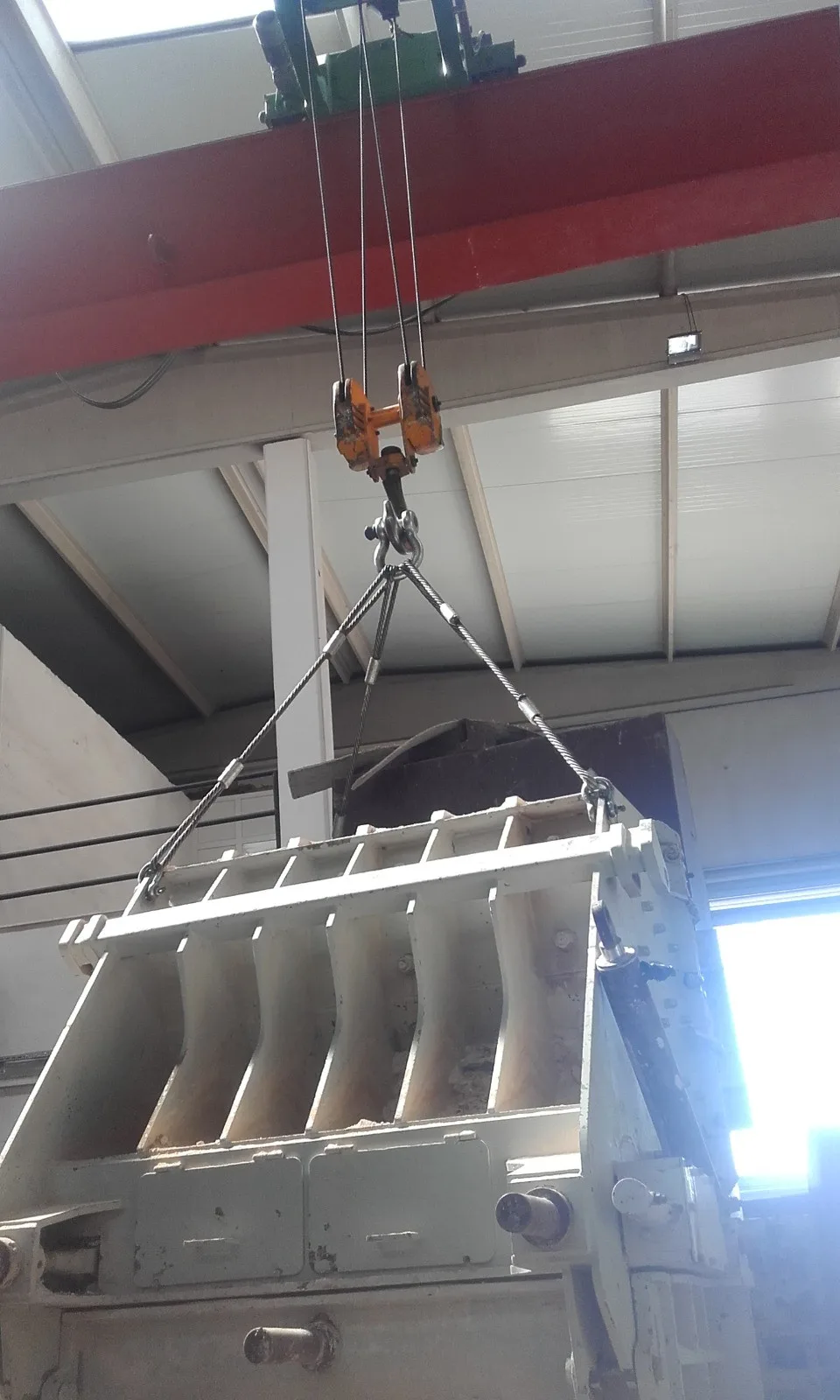
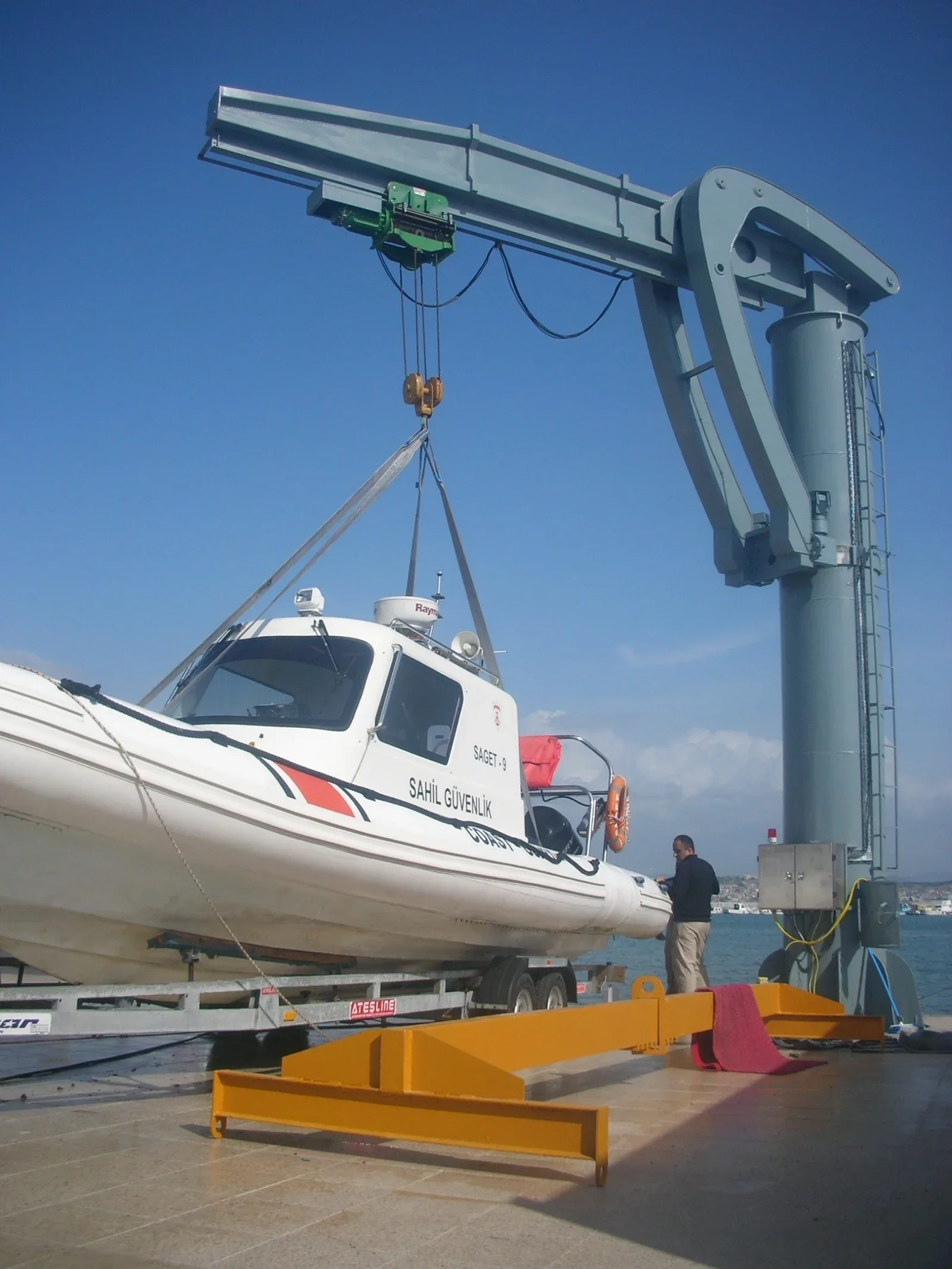
| Lifting beam and spreader beam | Long, flexible or multi-point loads: sections, pipes, sheet bundles, moulds | Own weight counts against capacity; suspension points set to the centre of gravity; a spreader beam needs more headroom |
| Chain sling (EN 818-4) | Heavy, angular or hot parts; foundry, forging, steel construction | Grade mark and tag; stretch, nicks, cracks, bent links; manufacturer's derating for heat; never knotted |
| Wire rope sling (EN 13414-1) | General heavy lifting; machinery and steel parts | Broken wires, crushing, kinks and corrosion; protection on sharp edges; eye and ferrule area |
| Polyester webbing sling and roundsling (EN 1492-1, EN 1492-2) | Painted, machined or delicate surfaces; cylindrical parts | Cuts, abrasion and heat damage; chemical compatibility; edge protection; never used with a missing or illegible label |
| Lifting magnet (permanent, electro-permanent, electromagnet) | Ferromagnetic plate, sheet, blocks and sections | Holding force depends on thickness, air gap, surface and temperature; some stainless steels are not magnetic; behaviour on power failure depends on the type |
| Vacuum lifter | Flat, airtight surfaces: glass, stone, sheet metal, panels | Less grip on porous, dirty or curved surfaces; vacuum gauge, warning device and vacuum reserve |
| Plate clamp | Single plates and sheets, lifted vertically or horizontally | Thickness range and lifting direction; locking mechanism; one plate at a time |
| C-hook and coil lifting devices | Steel coils, wire coils | Coil width and diameter range; hangs level empty and loaded; protection of the coil bore |
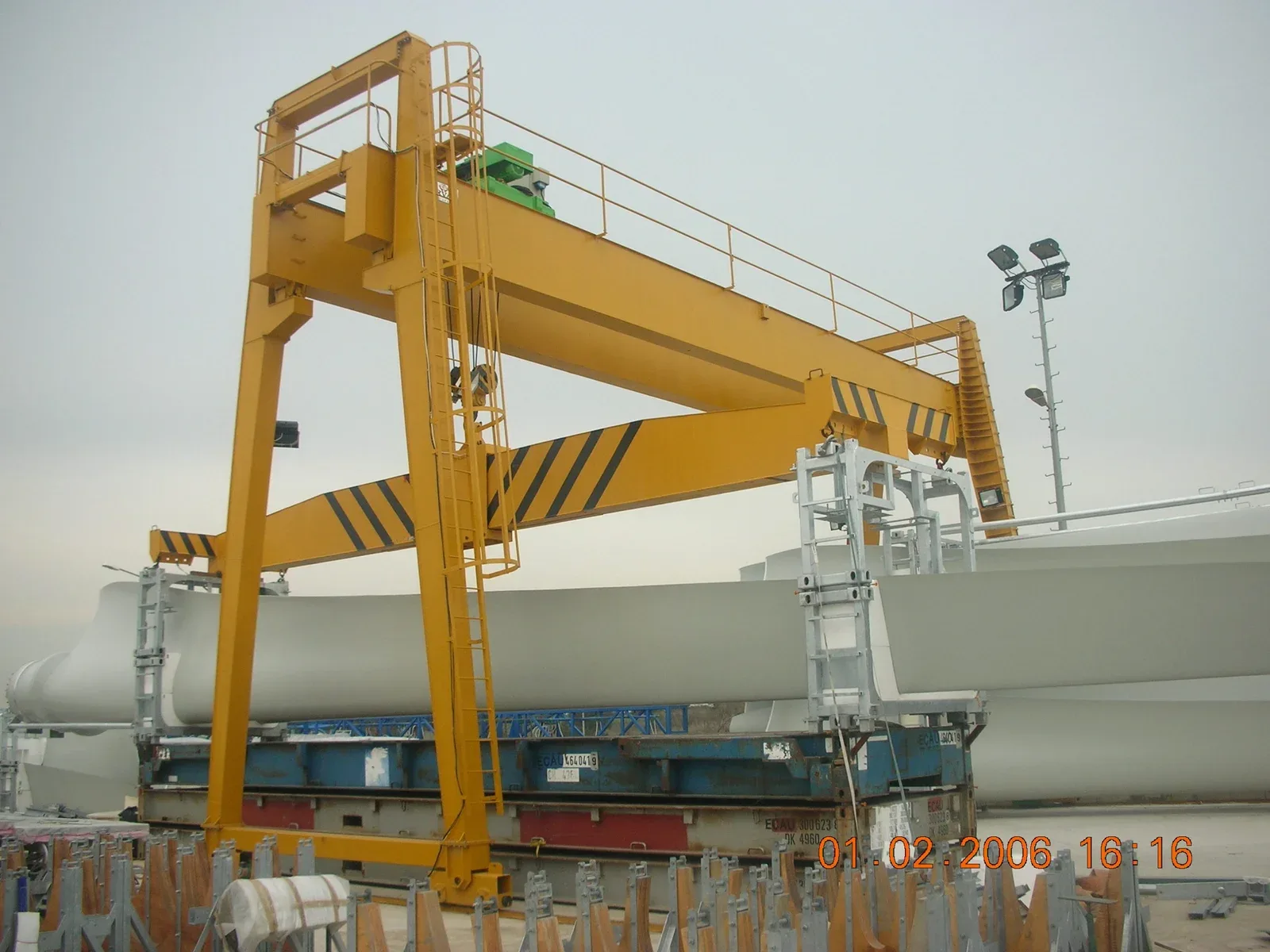
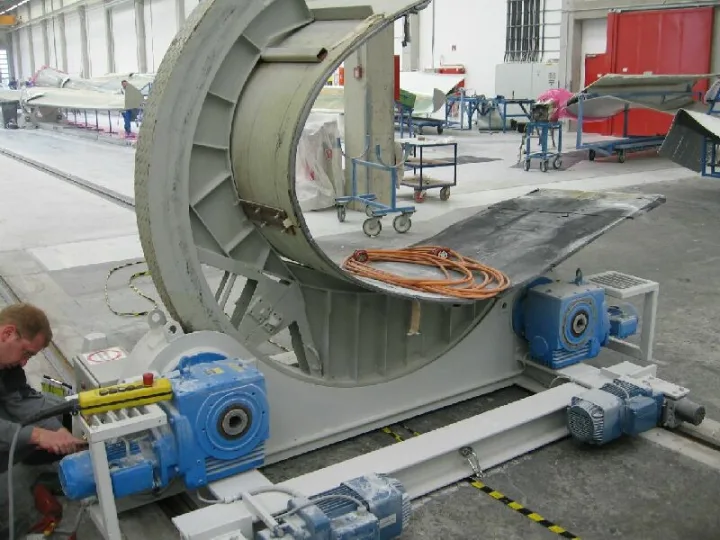
| Custom lifting attachments | Loads that standard devices cannot hold safely: wind turbine blades, large moulds, process parts | Design and strength calculation from load and process data; WLL marking and instructions; assessed together with the crane |
How do you calculate the net load the crane can still lift?
An overhead crane's rated capacity applies to everything hanging from the hook; the crane cannot tell the product from the device. The basic rule is:
Maximum net load = crane rated capacity − weight of all below-the-hook equipment
The second check is the equipment itself. Every attachment and sling has its own working load limit (WLL), and the lowest limit in the chain governs. The figures below are round, illustrative values, not data from a real project:
- Crane rated capacity: 10 t
- Lifting beam self-weight 1 t; two slings below the beam 0.1 t in total
- Crane limit: 10 − 1 − 0.1 = 8.9 t net load
- If the beam's WLL is 8 t, it can carry at most 8 t including the slings below it: 8 − 0.1 = 7.9 t net load
- Result: the heaviest permissible load is 7.9 t, and each sling must also carry its share at its leg angle.
With magnets and vacuum lifters, the holding capacity also depends on material, thickness and surface. Sizing the crane together with its accessories is covered in our article on overhead crane capacities.
Why do centre of gravity, hook height and sling angle matter?
Centre of gravity
The hook must sit directly above the load's centre of gravity. Otherwise the load swings or tilts as it lifts and the sling legs share the load unequally: the leg nearer the centre of gravity carries more. For asymmetric loads, use a beam with adjustable suspension points or legs of different length, and lift a few centimetres first to check the balance.
Lost hook height
Every device takes up space between hook and load, so the highest point the load can reach lies below the hook height by the height of the device and its slings. A lifting beam hung from a single point usually costs little height; a spreader beam rigged with angled top slings can be lighter but needs more headroom. Define the device at the start of a crane project and include it in the hook height and clearance calculation.
Sling angle
On multi-leg slings, the force in each leg rises as the legs move away from the vertical. At 60° to the vertical, each leg of a two-leg sling carries a force equal to the whole load. That is why multi-leg slings are rated for angle ranges and must not be used beyond 60° to the vertical. Basic rigging rules are covered in our guide to safe overhead crane operation.
What happens to magnets and vacuum lifters if the power fails?
For lifting magnets, the answer depends on the type:
- Permanent magnet: the holding force comes from permanent magnets and needs no electricity; the magnet is switched on and off with a lever. A power cut does not affect it.
- Electro-permanent magnet: permanent magnets hold the load; electricity is used only briefly to switch the magnet on and to release the load. If the power fails during a lift, the load stays held.
- Electromagnet (mains or battery-fed): it holds only while current flows, so a supply failure can drop the load. It therefore needs an automatic warning of supply failure, a standby battery that holds the load for a limited time and controls that prevent inadvertent release. The backup time is for setting the load down safely, not for carrying on.
Vacuum lifters split the same way. On types with a pump or ejector, the vacuum decays after a power failure, so they need a vacuum gauge, an audible or visual warning that still works without power and a vacuum reserve that holds the load for a short time. Self-priming types, which generate the vacuum mechanically through the lifting motion, need no external power.
The Machinery Directive requires the instructions to state the limits of use of magnetic or vacuum devices that could release the load if the power fails. Whatever the type, nobody should stand under a suspended load.
Marking, CE and inspection: what should you check?
Marking
Every lifting accessory must be permanently marked with its maximum working load and, where needed for safe use, its material (Machinery Directive 2006/42/EC, Annex I, 4.3.2). On slings this information is on a tag or label. The marked load is not the breaking load: the directive generally specifies a working coefficient of 5 for wire rope slings and 7 for textile slings. That margin covers fatigue, wear and dynamic effects – it is not spare capacity. If a device's self-weight is not marked, ask the manufacturer for it.
CE marking and instructions
Lifting accessories, slings included, fall under the machinery rules and are placed on the market with CE marking, a declaration of conformity and instructions. In the EU, Directive 2006/42/EC applies until the Machinery Regulation (EU) 2023/1230 takes over on 20 January 2027. The instructions must at least state the intended use, the limits of use, assembly, use and maintenance information and the static test coefficient applied.
Pre-use checks and thorough examination
Before every use, the user checks slings and attachments visually: is the label legible; are there cuts, crushing, cracks, stretch or deformation; are shackle pins, safety latches, magnet cables and vacuum seals intact? Defective equipment is tagged and taken out of service, never patched up on site. A competent person must also examine the equipment thoroughly at set intervals. In Great Britain, LOLER 1998 requires a thorough examination of lifting accessories at least every six months unless an examination scheme drawn up by a competent person sets other intervals; in Germany, DGUV Regel 109-017 sets a maximum of one year. Crane inspection rules are summarised in our article on overhead crane inspection requirements.
What information do you need to choose a device?
Before ordering a lifting device, answer these questions:
- Load geometry: dimensions, weight, centre of gravity and attachment points; is the load flexible?
- Surface sensitivity: painted, machined or coated surfaces may not tolerate steel slings or serrated clamp jaws.
- Material: is the load ferromagnetic for a magnet, and is the surface airtight for a vacuum lifter?
- Temperature: hot parts rule out textile slings and magnets not designed for hot work.
- Number of cycles: a few lifts a day and shift-long series work do not call for the same device; the Machinery Directive requires lifting accessories to be sized with due regard to fatigue and ageing.
- Environment and power: outdoor use, humidity, chemicals and dust; for magnets and vacuum lifters, the power supply and the link to the crane controls.
How does Ervan Cranes support custom lifting attachments?
Ervan Cranes designs, manufactures and commissions industrial cranes and lifting systems at its facility in Torbalı, İzmir, Türkiye. Our custom-engineered cranes cover project-specific lifting and handling systems for tasks that standard crane ranges cannot meet; their application areas include custom lifting attachments and process integration. Within this scope we design project-specific attachments such as lifting beams around the load and the process, with engineering and production in-house.
In project design, we select the crane by load, span, lifting height and duty class and prepare the technical drawings and calculation report. When you enquire about single and double girder overhead cranes from 1 to 100 t, state the weight and height of the lifting devices you plan to use. Our quote request form starts short: technical details are optional, and our engineering team will clarify any fields you leave blank.
Frequently Asked Questions
Does the weight of below-the-hook equipment count against crane capacity?
Yes. An overhead crane's rated capacity covers everything hanging from the hook: lifting beam, slings, shackles, magnet or vacuum lifter. The net load is the rated capacity minus the weight of all this equipment. Each attachment and sling also has its own working load limit, and the lowest limit in the chain governs. The hook block itself is part of the crane.
When do you need a lifting beam?
A lifting beam makes sense when the load is long or flexible, must be picked up at several points, would be damaged by slings or need very wide sling angles, or when headroom below the hook is tight. Typical examples are sections, pipes, sheet bundles and moulds. Its own weight comes off the crane's capacity, and its suspension point must suit the centre of gravity.
What happens if the power fails during a magnet lift?
It depends on the type. A permanent magnet uses no electricity and is unaffected; an electro-permanent magnet needs power only to switch on and release, so it keeps holding. An electromagnet holds only while current flows, so a power failure can drop the load. It therefore needs a supply-failure warning and a standby battery that holds the load for a limited time, and nobody should stand beneath it.
How often should slings be inspected?
Before every use, the user checks the label and looks for cuts, crushing, cracks, stretch and deformation; damaged slings are withdrawn. A competent person also examines them thoroughly at intervals set by national law, more often under heavy use: in Great Britain at least every six months under LOLER unless an examination scheme applies, in Germany at least once a year.
Can a custom lifting attachment be made for a specific load?
Yes. For loads that standard devices cannot hold safely, a lifting beam or handling attachment can be designed around the load and the process. Such a device is itself a lifting accessory and needs a strength calculation, WLL marking, a declaration of conformity and instructions. Ervan Cranes designs project-specific lifting attachments as part of its custom-engineered solutions; a drawing of the load with its weight and centre of gravity is a good start.